When Waiting Is Fine
If your door still opens and closes smoothly and the only issue is a squeak or a little surface rust on the track
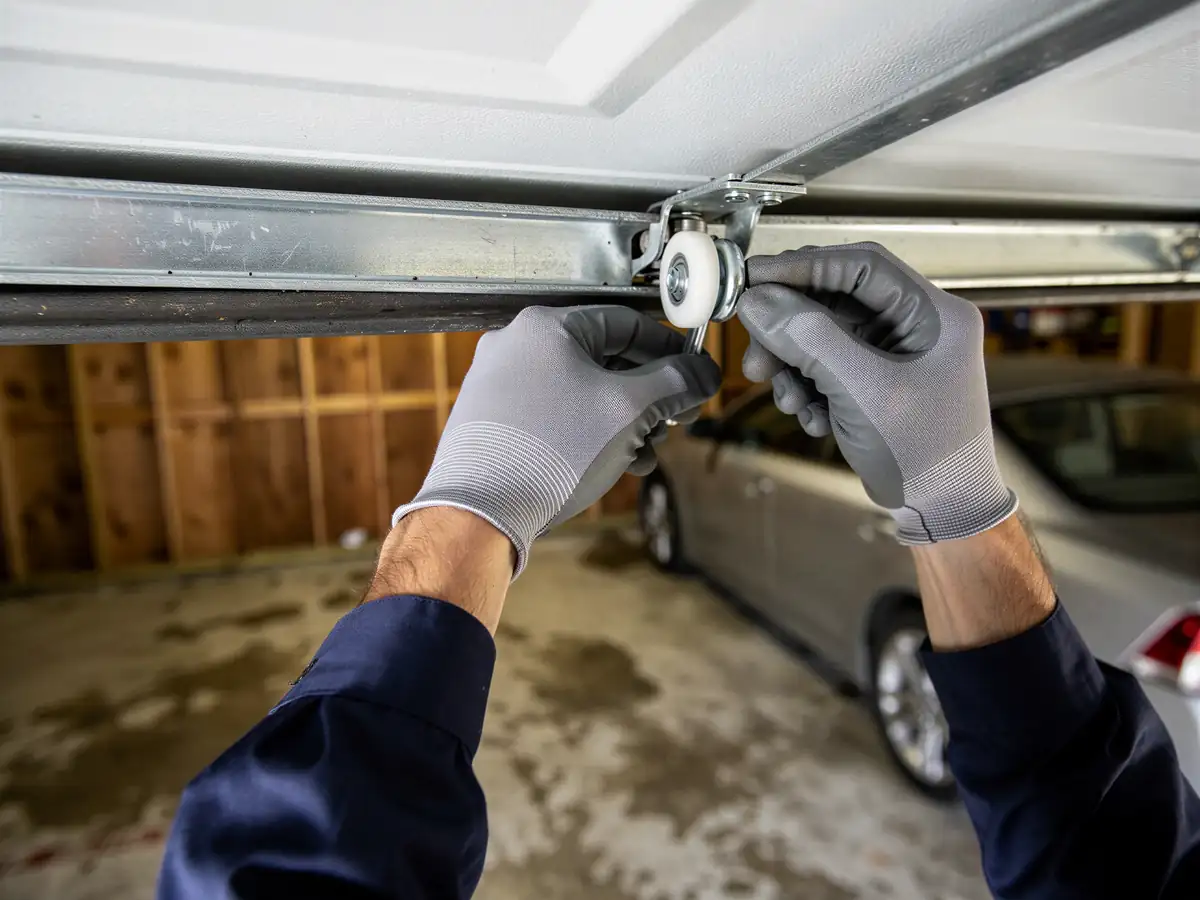
You don't need to call anyone yet. Most houses in this area were built between 1988 and 2013, with a median build year around 1994, and the galvanized hardware from that era holds up fine with nothing more than an occasional shot of lubricant on the rollers and hinges. There's no freeze-thaw cycle here hard enough to crack a panel seam the way it does further north, so cosmetic wear isn't a warning sign on its own.
What isn't fine to wait on
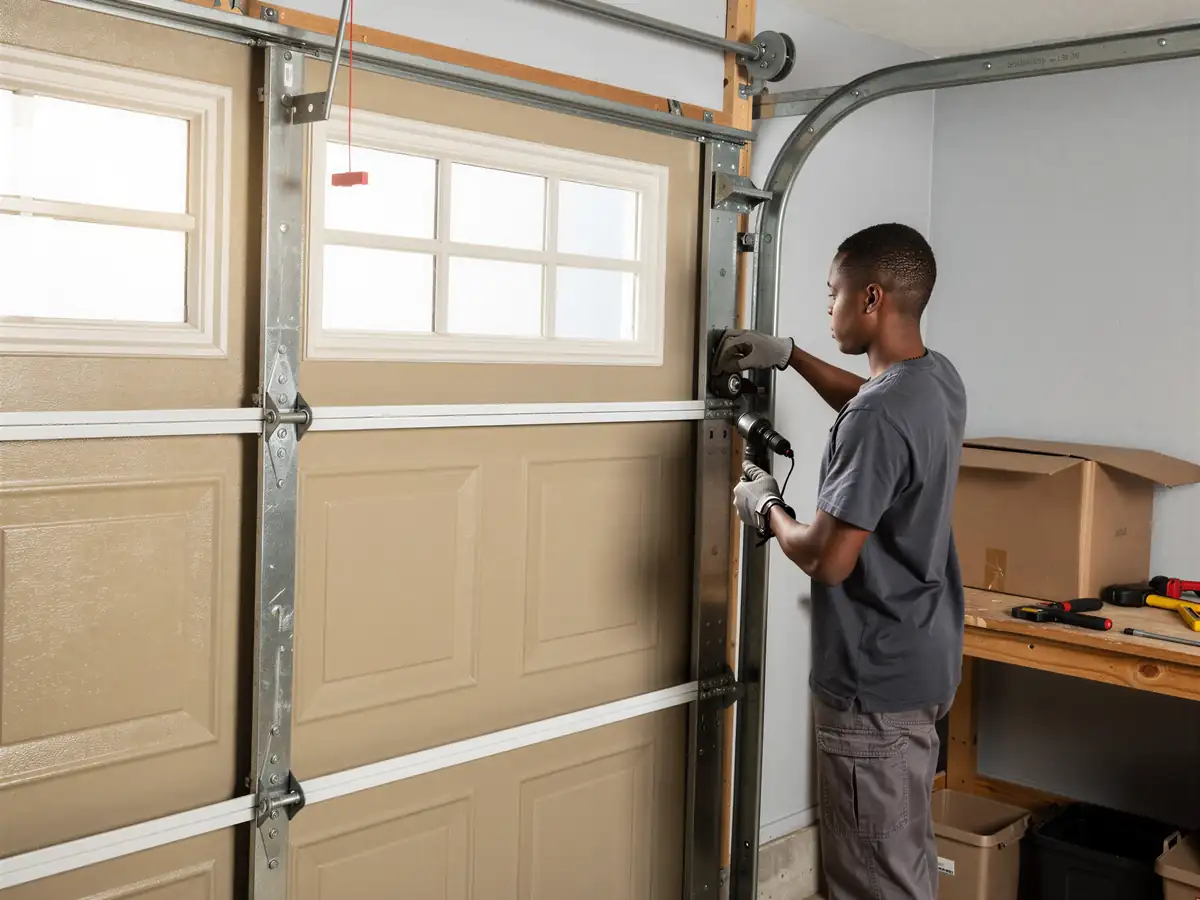
A spring that's visibly stretched or gapped, a cable that's frayed at the drum, or a door that slams the last six inches instead of settling. Those are mechanical failures, not weather damage, and they get worse fast. The honest answer is that most calls we'd rather not get are the ones where someone waited through three weeks of a grinding noise before the spring let go entirely. If the door sounds different than it did last month, that's the one thing worth not waiting on.
The Cost of This Job
What a job costs here has more to do with the age of the door than anything else. Houses across the six named areas of mostly 1980s and 90s stock were built with a narrower band of door sizes and opener models than you'd find in a town with a longer construction history, which means parts for a 1994-built double door are usually on the truck rather than special-order. That keeps a straightforward spring or roller job from turning into a multi-day wait.
Where cost climbs is when the original opener itself is the problem rather than the door. A chain-drive unit installed when a house went up in the early '90s is now three decades old, and once the circuit board or motor goes, repair parts for that specific model often aren't worth chasing down. At that point replacement is the honest recommendation, not a repair quote padded to look thorough. With a median household income of $68,085 across the service area, most owners here are weighing that replacement decision carefully rather than treating it as routine, and we'd rather tell you that up front than run the clock on a doomed repair.
What Local Conditions Do
Bluffton sits in a mild climate band with only occasional freeze, which changes what actually fails on a door here compared to a harsher climate. You won't get the frozen-track calls or the cracked weatherstrip from repeated hard freezes that pile up elsewhere every winter. What you do get is humidity working steadily on unprotected steel - surface rust on hinges and bottom brackets that were never properly lubricated, and spring coils that corrode faster than they would in a dry climate even without ever seeing a hard freeze.
The occasional freeze still matters, though. On the handful of nights a year when it does drop below freezing, a door that's been running dry all year is more likely to bind or stick right at that moment, because cold makes stiff hardware stiffer. It's not the kind of cold that cracks panels, but it's enough to turn a marginal roller into a stuck door on the one morning you need to leave early. Routine lubrication does more here than in a lot of climates, precisely because the climate is mild enough that people skip it.
What Is Going On
The pattern right now is straightforward
A lot of garage doors across this area are hitting the same point in their life at roughly the same time. With a median build year around 1994 and most construction falling between 1988 and 2013, the original torsion springs on a large share of houses are at or past the end of a normal service life, and that's showing up as a cluster of spring-failure calls rather than a steady trickle.
With 15,782 households and 5,108 owner-occupied houses in the service area, that clustering isn't a coincidence
It's just a lot of doors built in the same decade reaching the same wear point together. Newer construction closer to Palmetto Bluff, about 2 miles southeast, isn't showing this pattern yet because those doors are younger. Closer to the older pockets of 1980s and 90s stock, though, the springs, openers, and cables installed at construction are the thing actually going on, more than any one dramatic failure. It's ordinary wear arriving on schedule, which is also the easiest kind of call to plan for instead of react to.
- 15,782 households
- 5,108 owner-occupied
- 2 miles