When Waiting Is Fine
Most houses in Bluffton went up between 1988 and 2013, with the median landing around 1994
That means a huge share of the doors we look at are carrying original or first-replacement torsion springs that are twenty to thirty-five years old. If your spring is making a little extra noise on a cold morning but the door still opens level and the cable isn't fraying, you don't need to call anyone yet. A spring that's groaning but still holding tension can often run another winter.
What you're watching for is a change, not a sound
If the door starts drooping on one side when it's down, if the opener strains harder than it used to on the same cold mornings, or if you see a gap opening in the coil itself, that's past the point of waiting. In six of Bluffton's named residential areas the stock is still mostly 1980s and 90s construction, so a lot of this hardware has simply never been swapped. Old doesn't mean broken. It means you're on borrowed time, which is a different thing, and it's fine to ride it out as long as nothing's actually failing yet.
The one case where waiting isn't fine: a spring that's already separated
At that point the door is unsafe to run by opener or by hand, and it sits until someone replaces it.
The Cost of This Job
We don't have a flat number to give you here, because what a spring job runs depends on the door's weight, whether it's one spring or a matched pair, and whether the drums or cables are worn enough to go at the same time. What we can tell you is what drives the number up or down: a single door usually means a single spring, a double door almost always means two, and if one side of a pair breaks the other is close behind it, so replacing both at once is usually the honest call rather than two separate trips.
At a median household income of $68,085 across the service area, most of the owners we talk to aren't the type to swap a spring early just because it's aging. That's a reasonable choice. The spring itself is not an expensive part. What costs more is letting it go long enough that the cable frays or the drum cracks under the uneven load, because then you're paying for parts that didn't have to fail.
One limitation worth saying plainly: if the track is bent or the opener is already weak, a spring swap alone won't fix the door. We'll tell you that before we start, not after.
What Local Conditions Do
Bluffton sits in a mild climate band that still gets some freeze, not the hard winters you'd get further north, but enough cold mornings to matter. Steel contracts when it's cold, and a torsion spring that's already fatigued from years of cycling loses a little more give every time the temperature drops overnight and swings back up by afternoon. That swing is harder on old metal than steady cold or steady heat would be.
This is why the calls cluster around the first real cold fronts of the season rather than spreading out evenly across the year. A spring that's been quietly weakening since the Clinton administration doesn't pick a random Tuesday to go. It picks the morning it's 38 degrees and the door hasn't moved since the garage warmed back up the day before.
Humidity plays a smaller role too. Years of salt air and moisture cycling in and out of the garage will work on an unprotected spring's coating faster than dry inland air would, which is one more reason original hardware from the 1990s stock still common in several parts of town is further along than its age alone would suggest.
What Is Going On
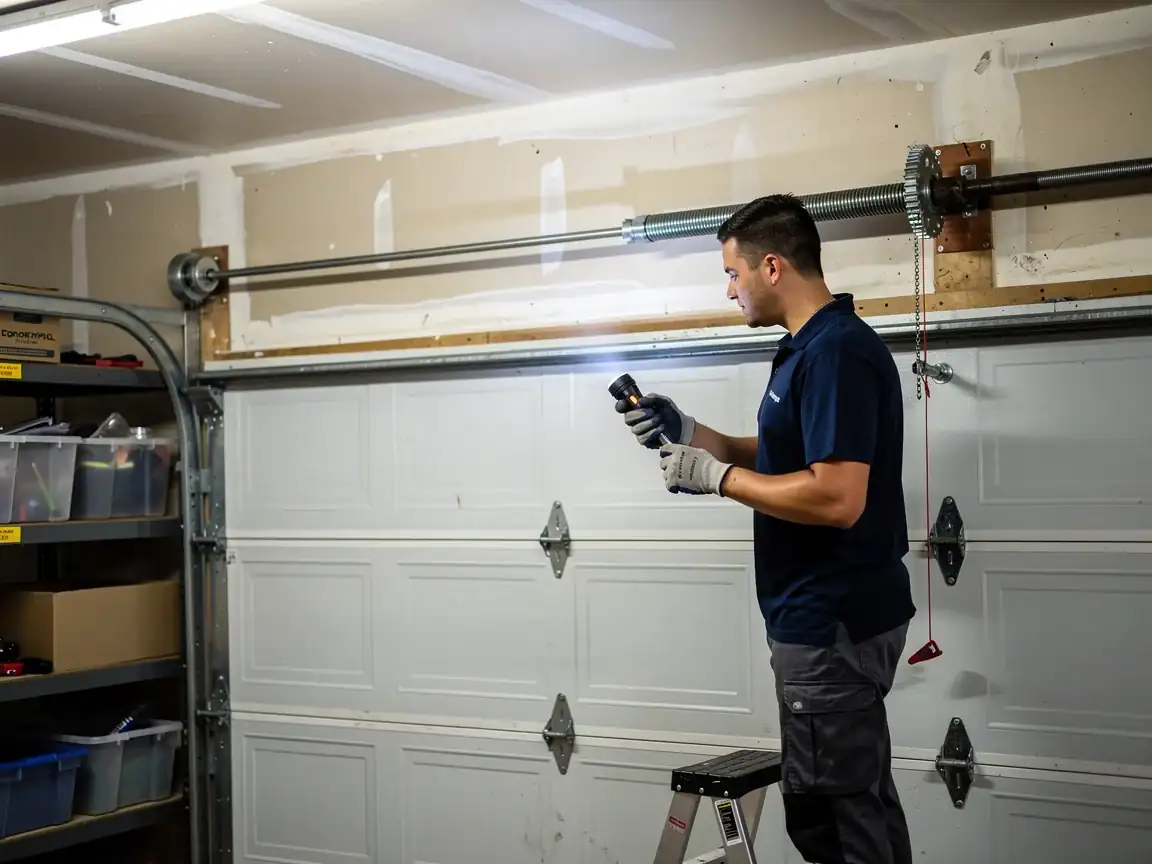
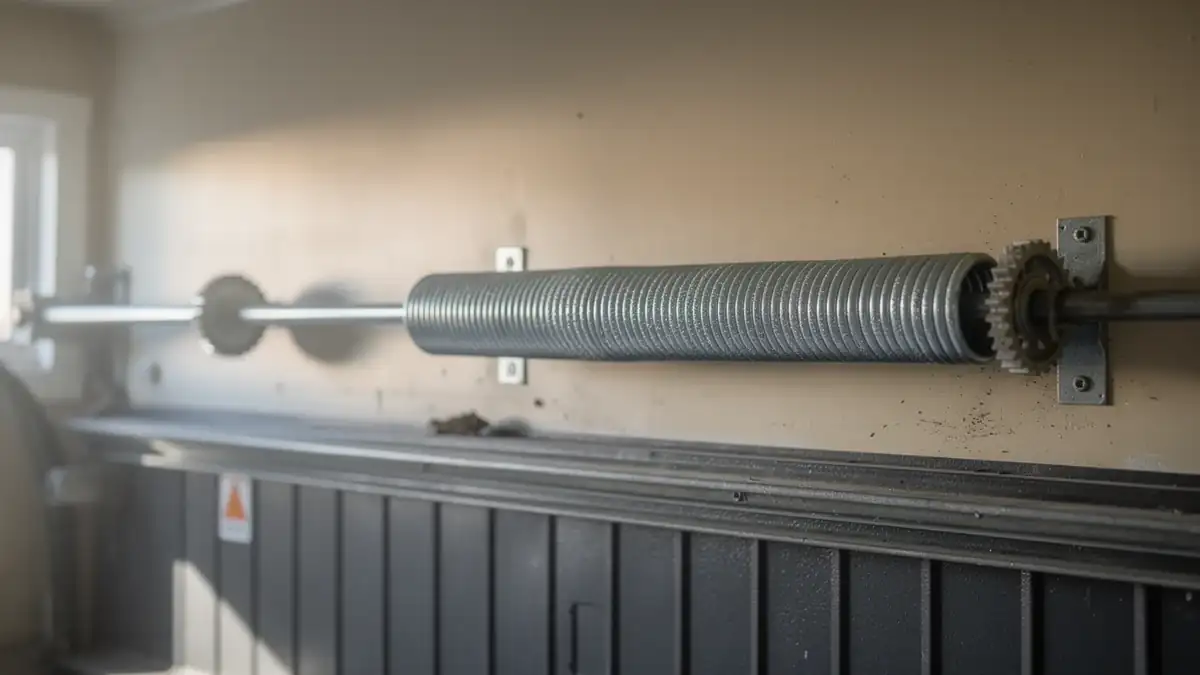
A torsion spring holds all the tension that lifts your door
It's wound tight during installation and it stays wound for the life of the part, cycling a little tighter and a little looser every time the door opens and closes. Metal fatigue is cumulative - it doesn't reset overnight, and it doesn't average out. Every cycle takes a small amount of life off the spring, and cold makes the metal less forgiving of that cycle.
With 5,108 owner-occupied houses in our service area
A meaningful number of them are running springs sized for a door that's now two decades into a lifespan nobody originally mapped out. When one of those springs finally lets go, it's usually not a slow leak of tension - it's a sudden snap, often loud enough to hear from another room, and the door will either slam down or refuse to move at all depending on which side failed.
- 5,108 owner-occupied
If that happens, don't try to force the door by hand or by opener
The spring that's still intact is now carrying a load it wasn't built to carry alone, and running the door on it risks bending the track or straining the opener motor on top of the spring you already need replaced.