Can You Do This Yourself
A lot of homeowners can swap a wall button or a remote
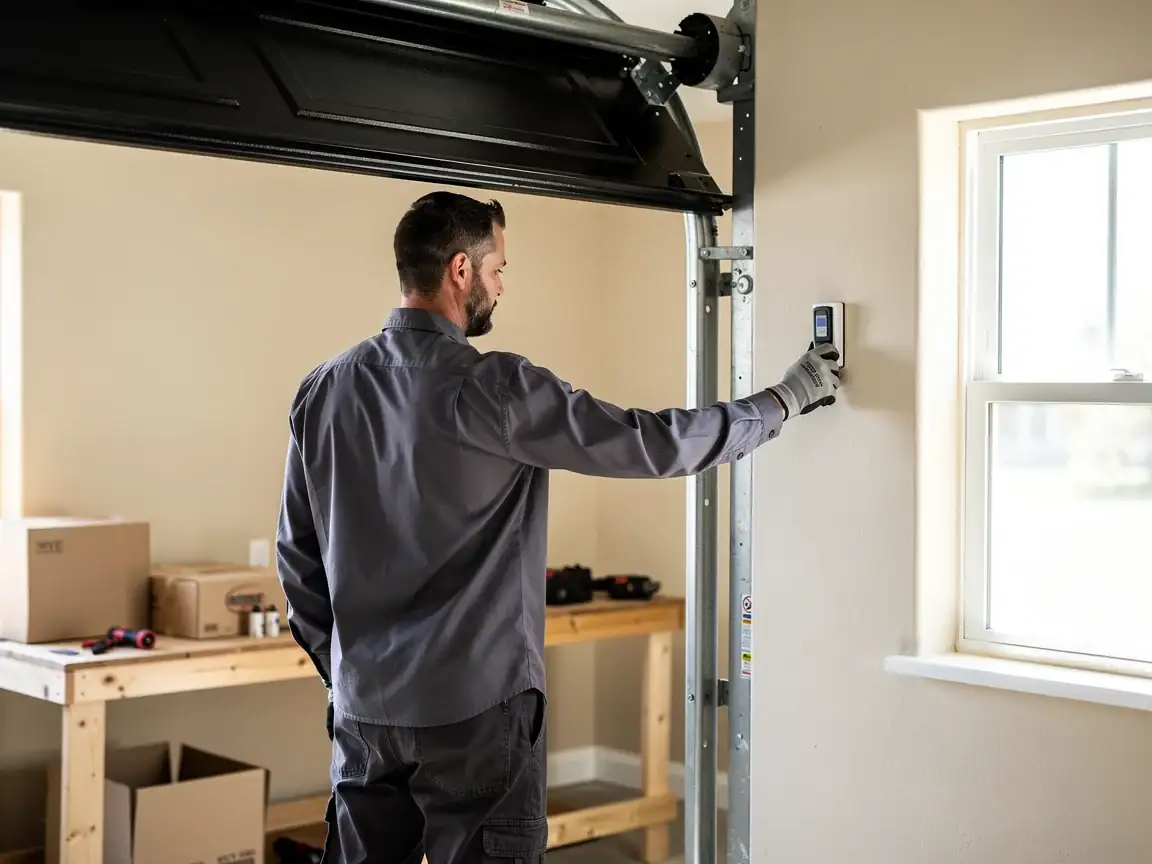
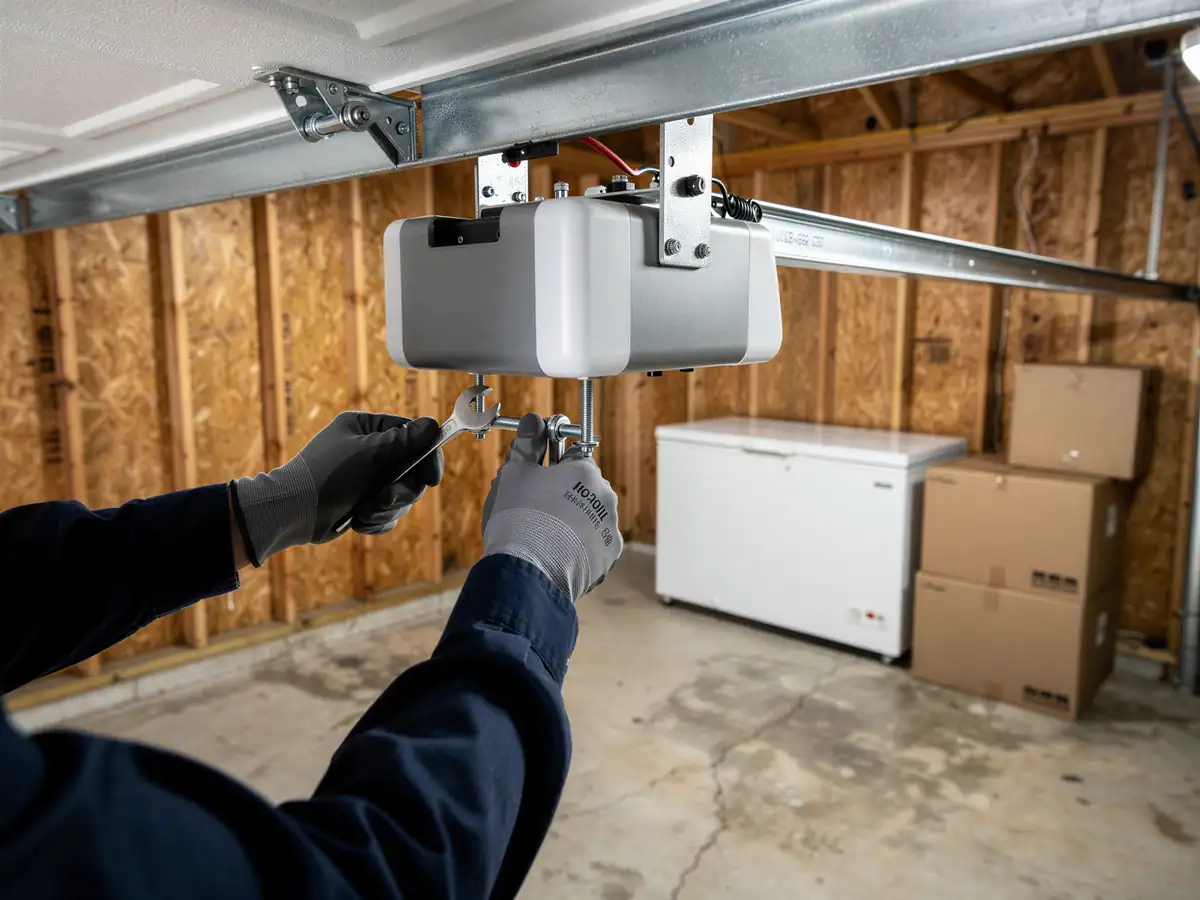
Installing the opener itself is a different job. You're mounting a unit rated for a specific door weight, wiring a safety reversal system that has to actually trip before a bumper touches the floor, and setting travel limits so the door doesn't slam or stall. Get the force setting wrong and you either crush something under the door or burn out the motor fighting a door that's binding on its track.
Most of the houses in this service area went up between 1988 and 2013
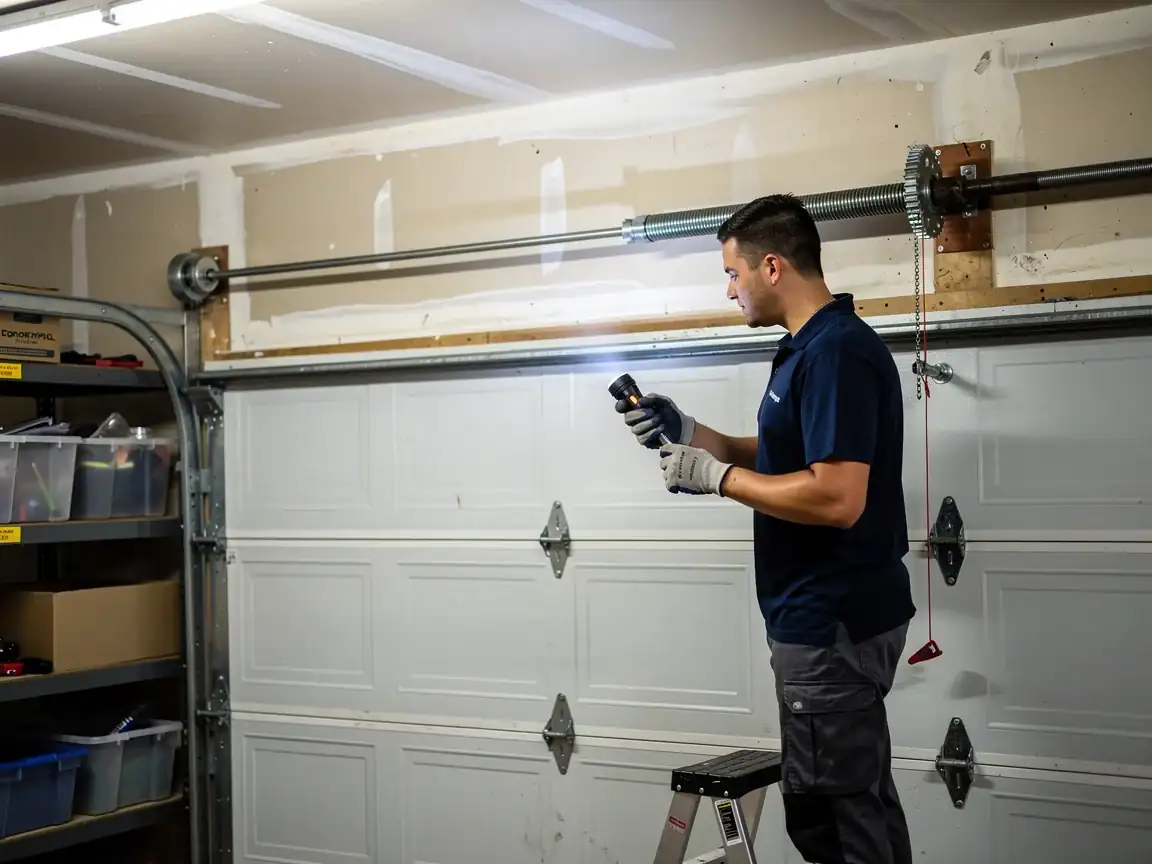
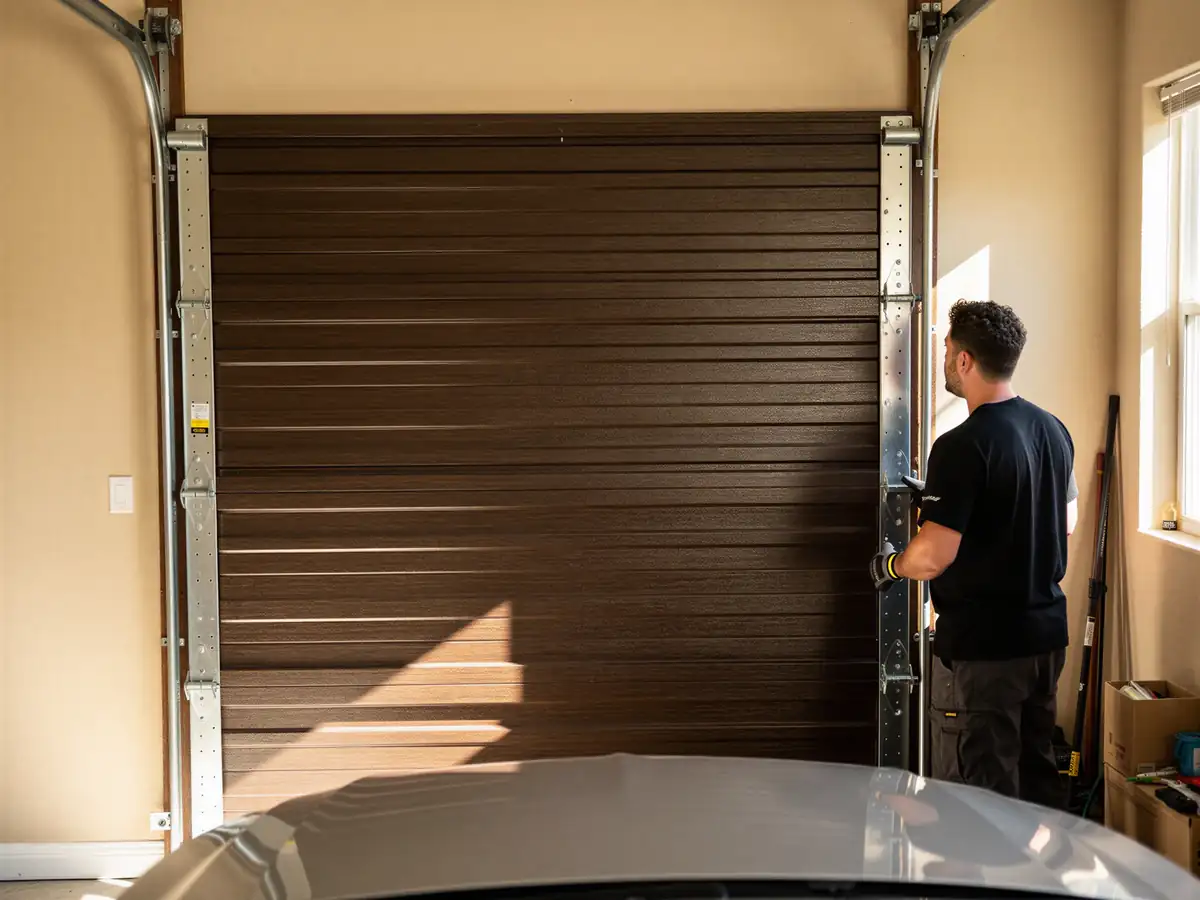
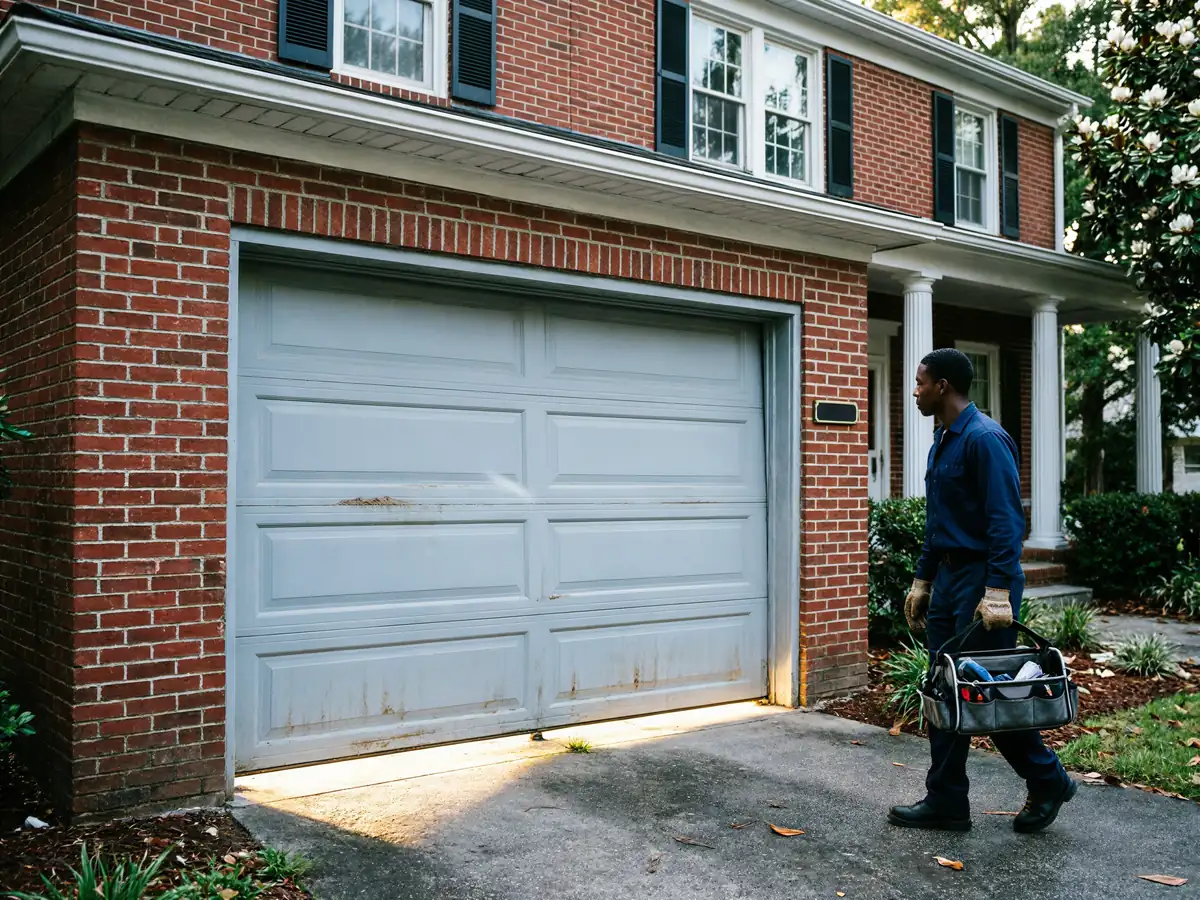
With a lot of that stock clustered in the 1990s. That means you're often not installing onto a bare door - you're installing onto an existing bracket, existing torsion spring, and header framing that's 20 to 35 years old. If the header isn't square or the spring is undersized for the door, a new opener will expose that problem the first week, not fix it.
- 35 years
We're not going to tell you it's impossible
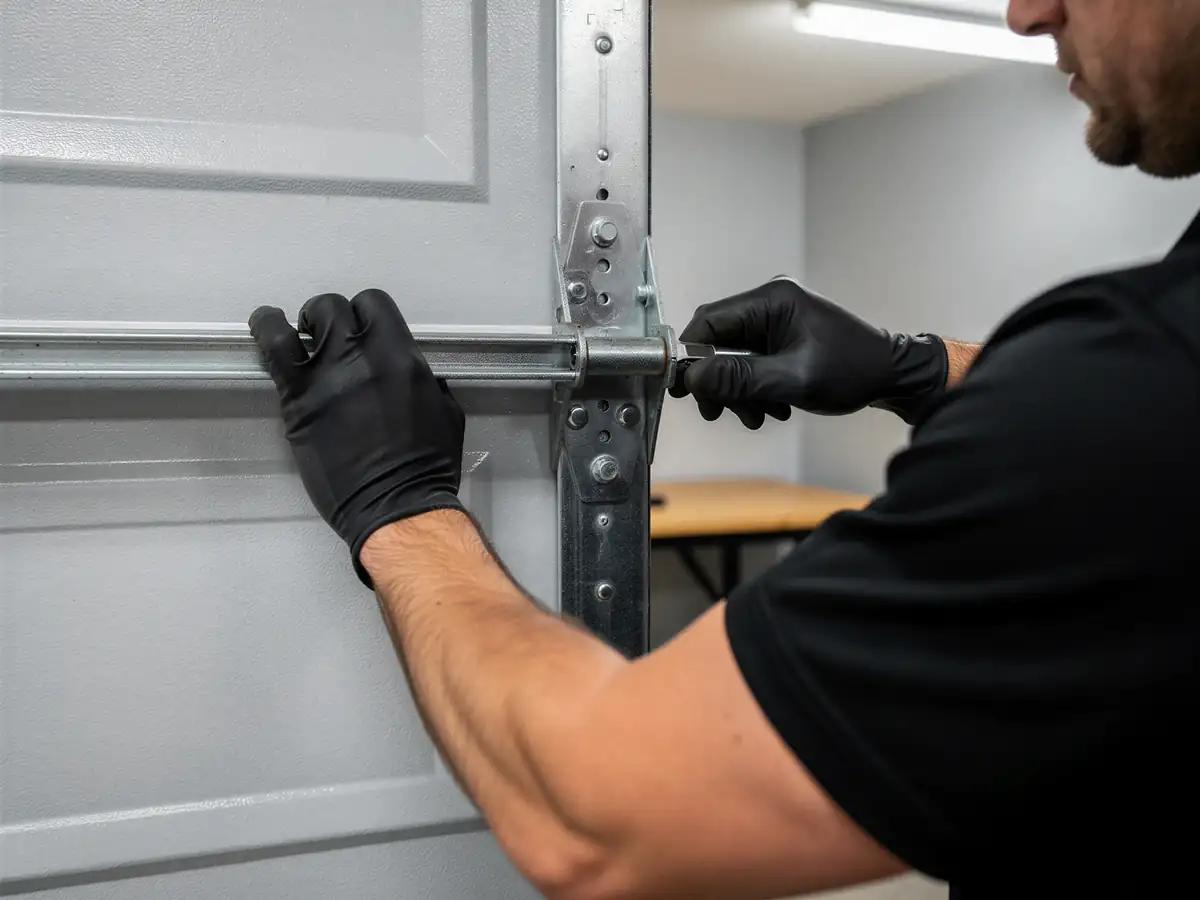
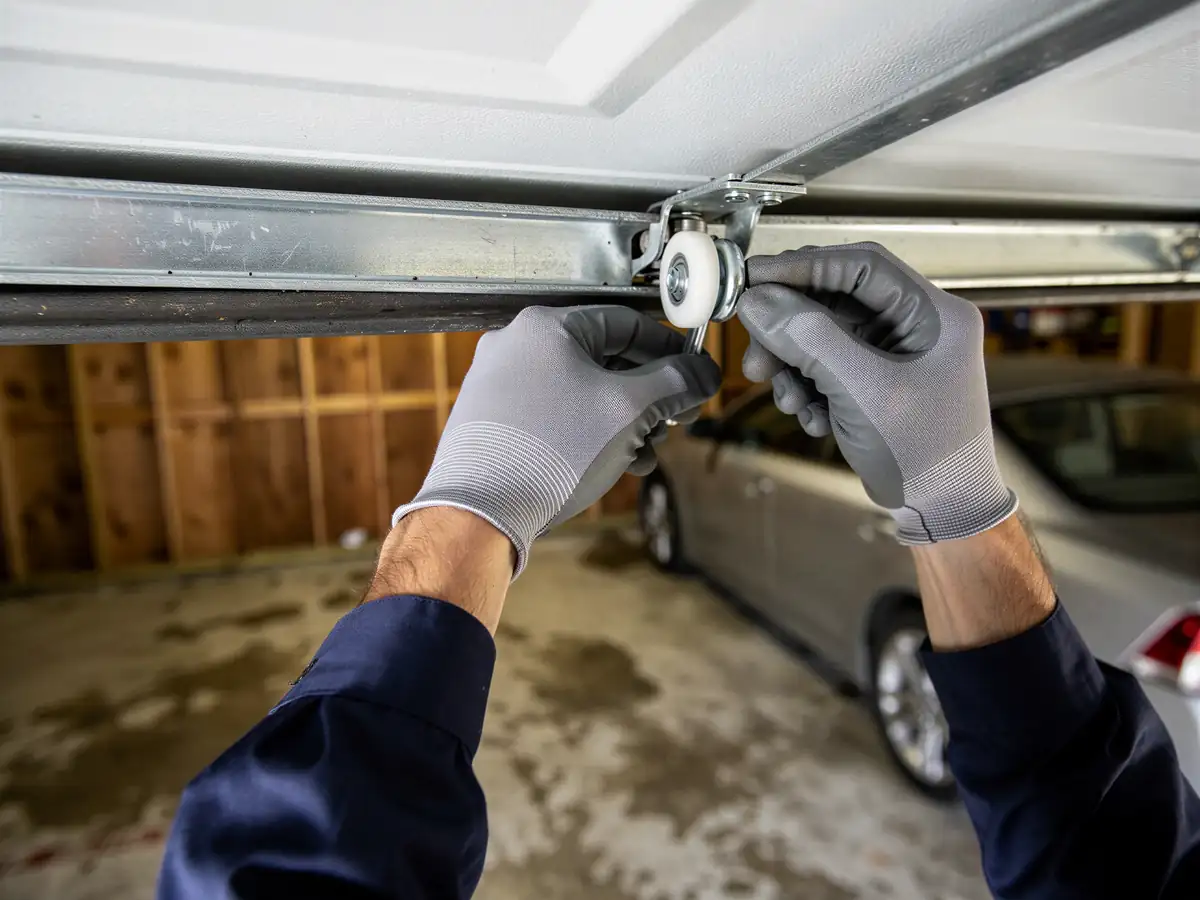
If you're comfortable with a ladder, a multimeter, and reading a torque spec, you can do the mechanical part. What trips people up is the safety sensor alignment and the force calibration - those two take a second set of hands and a little patience most people don't have time for on a Saturday.
Why It Happens Here
Openers in this area don't usually fail from cold - our climate stays mild with only occasional freeze, so you're not dealing with the ice-and-thaw cycle that kills openers up north. What wears them out here is humidity and age lining up at the same time. A big share of the local housing stock was built in the 1980s and 90s, which means a lot of original chain-drive openers from that era are now 25 to 40 years old. The gears inside those units are plastic, and plastic that's spent three decades in a humid garage gets brittle before it gets loud about it.
The other pattern we see: houses built later in that 1988-2013 window, into the 2000s and up to 2013, often still have their first opener too. Builders of that period tended to spec a mid-grade unit to pass inspection, not the heaviest-duty model on the shelf. On a standard-weight door that's fine for years. On a heavier insulated door added later, or a door that's picked up some sag, that same opener starts straining - you'll hear it in the motor before you see it in the door.
So the failure mode here isn't dramatic. It's a slow build of wear on original equipment that's simply outlasted its expected life, not a storm or a cold snap doing the damage.
Booking a Visit
When you call about opener installation, it helps to know three things ahead of time: the age of your current opener if you know it, whether the door is a single or double, and whether you've noticed anything else off - a door that drifts open on its own, a remote that only works some of the time, or a motor that runs longer than it used to before the door moves. Any of those point to wear beyond the opener itself, and we'd rather look at the whole system on the same visit than come back a second time.
We serve the households across this part of the Lowcountry - from the mix of owner-occupied houses near Bluffton out toward Hardeeville, Ridgeland, and the communities. If you're in one of those areas, we can usually give you a straight answer on whether your existing hardware is worth keeping or whether the whole setup should go at once.
One limit worth knowing: if your opener model is old enough that parts for it are discontinued, we're not going to chase down a part that doesn't exist. At that point replacement is the honest answer, not a repair quote that strings it out.
What You Are Seeing
If your opener is grinding instead of running smooth, that's usually the gear inside wearing down
Common on units original to houses from the 1990s that are still running their first motor. If the door reverses for no reason, the safety sensors are likely dirty, knocked out of alignment, or the force setting has drifted with age; that's a calibration issue, not always a sign you need a new unit.
A remote that works near the door but not from the driveway usually means a weak antenna or interference
Not a dying opener - that one's cheap to fix. But if the motor runs and you hear it straining, and the door is slow to respond or doesn't fully close, that's often the opener trying to do a job it was never sized for - especially on a door that's heavier than the original. In our mild climate, you won't see the sudden winter failures some regions get; wear here shows up gradually, as louder operation, slower response, and intermittent reversing before a full stop.