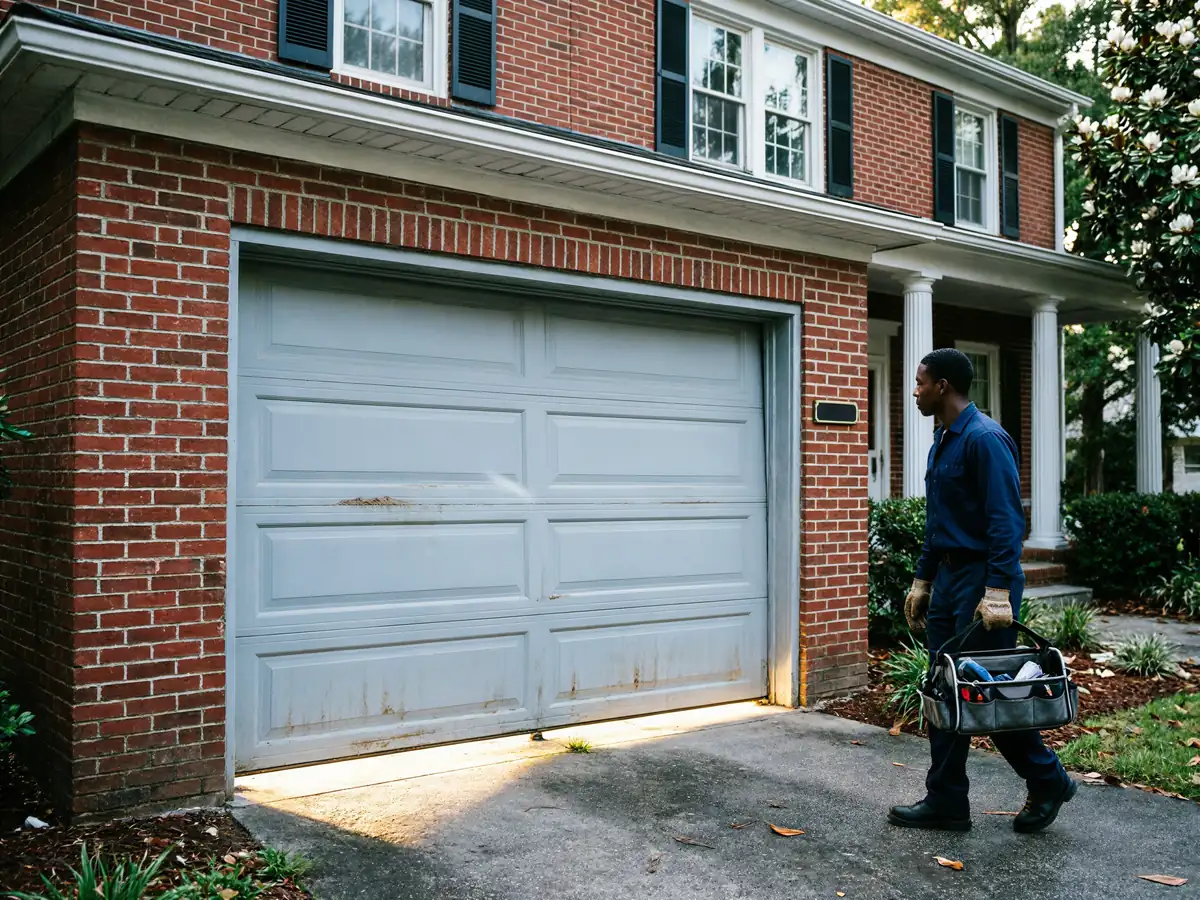
Is Your Bluffton Garage Door Worth Fixing, or Done
Bluffton's housing mostly went up between 1988 and 2013. Here's how that age and this area's mild, occasionally freezing winters decide whether your door is worth repairing.
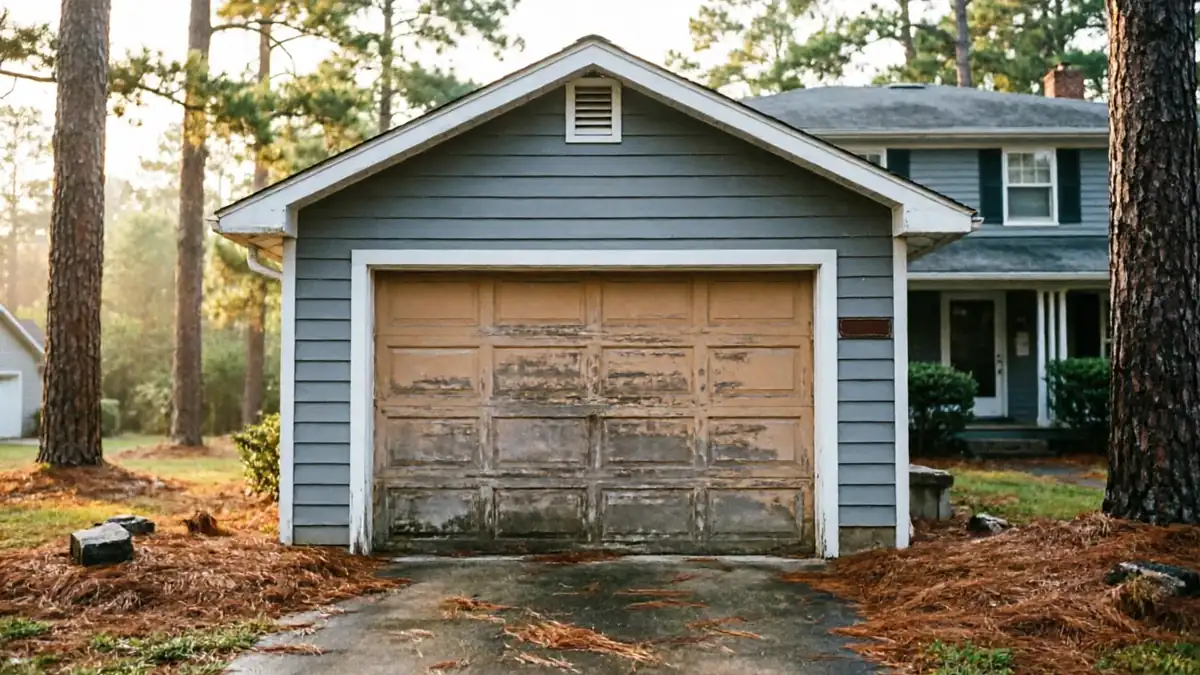
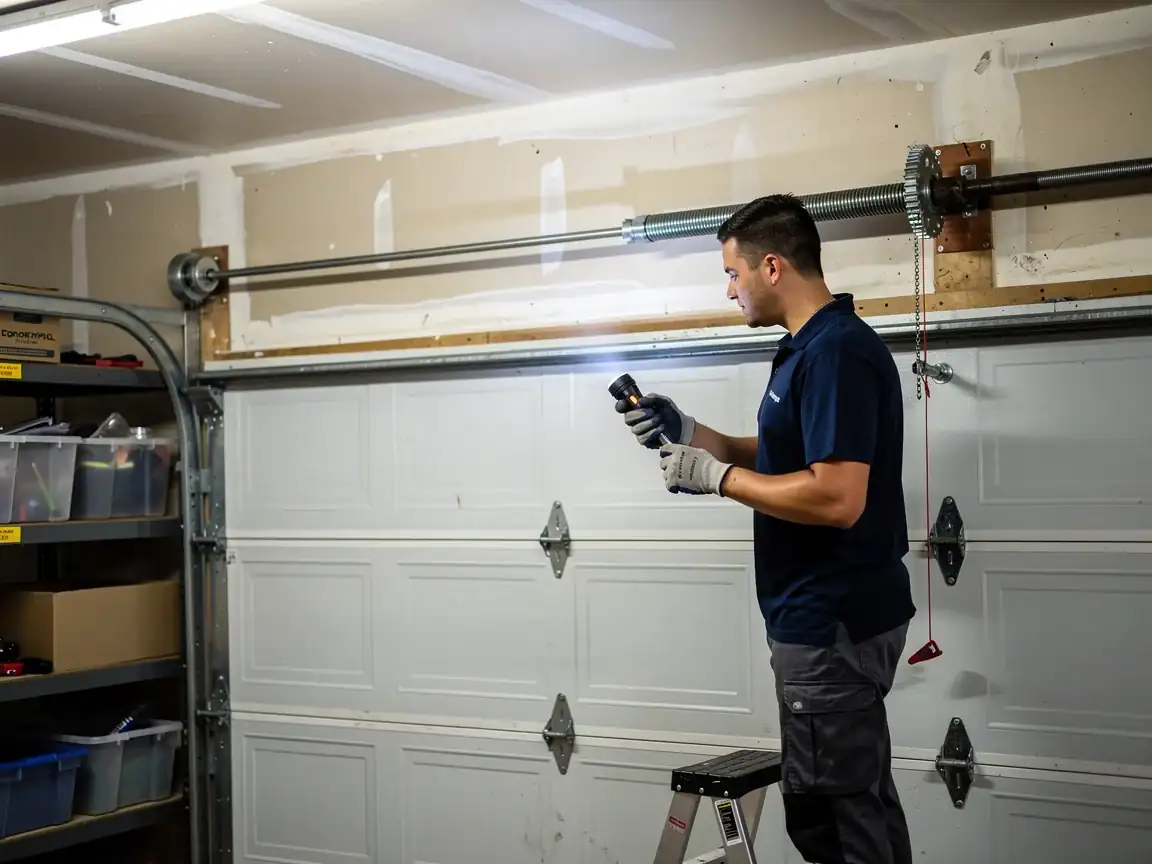
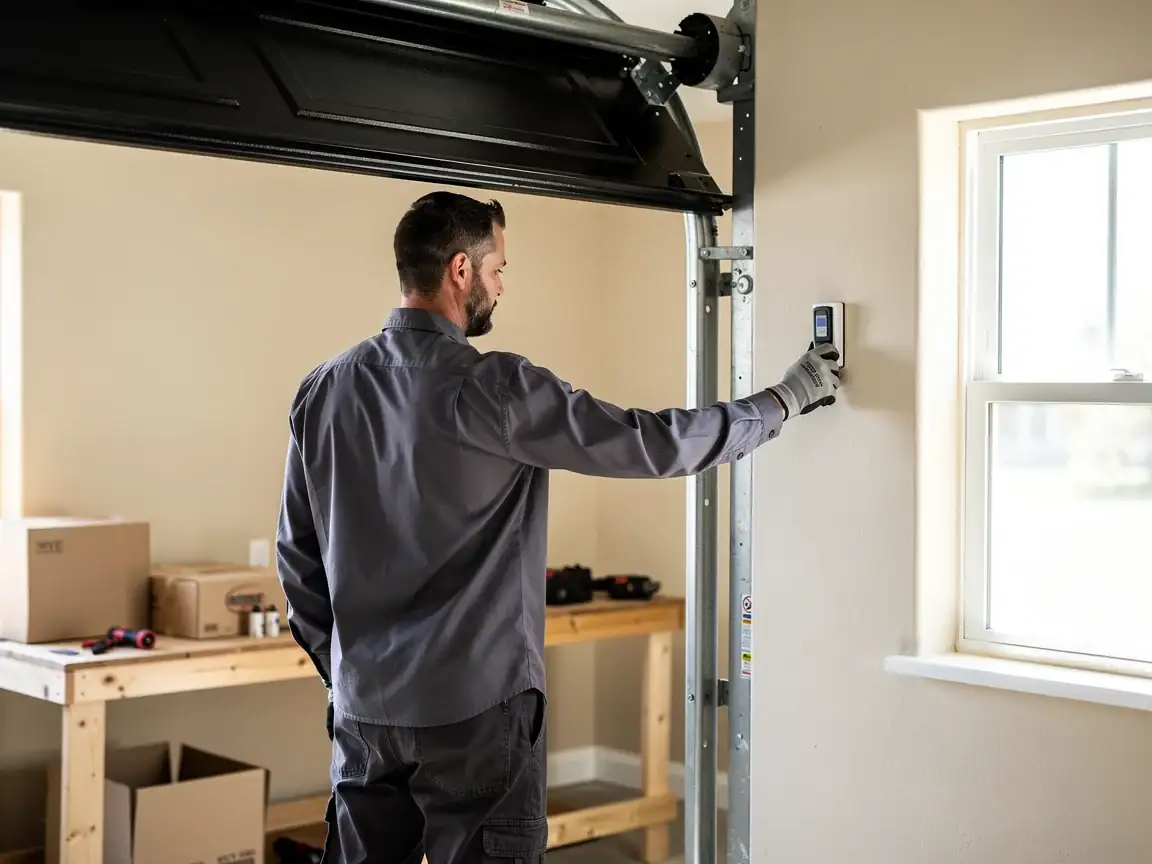
Most houses around here were built between 1988 and 2013, with the median landing around 1994. That puts a lot of original garage door hardware somewhere between ten and thirty-five years old right now, which is exactly the window where a door can go either way. If your door is sticking a little, making a new noise, or the opener takes an extra second to catch - that's wear, not failure. A torsion spring on a door from the mid-90s build wave is probably near end of life but not past it, and a slightly misaligned track on a 2000s-era house usually just needs an adjustment, not new rails. You don't need to call the day something sounds different. What you do need to watch is whether the door is still closing flush and sealing at the bottom - if it's gapping, that's not a wait-and-see problem anymore, that's a job.
The Cost of This Job
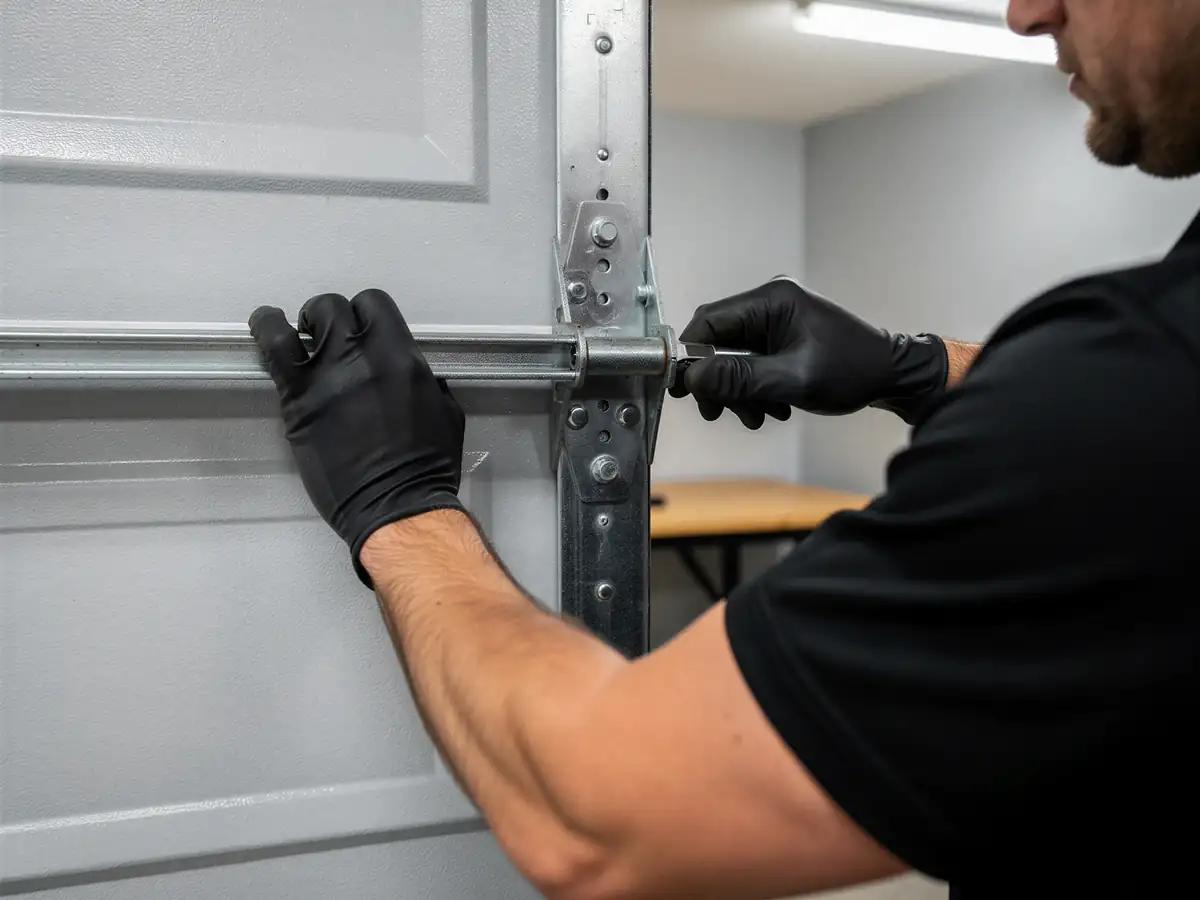
With median household income in the service area around $68,085, most of the calls we get are homeowners weighing a repair against a full replacement, not deciding whether they can afford either. That's the right way to think about it. A single spring or a damaged panel on a door that's otherwise sound is almost always the cheaper and more sensible fix. Where it stops making sense is when the door itself is original to a late-1980s or early-1990s build and the opener, springs, and panels are all showing age at once - at that point you're paying repair prices to delay a replacement you'll still need. I'll be honest about the one thing I can't tell you without seeing it: parts availability on some of the older steel doors from that first wave of construction has gotten tight, and if the manufacturer's stopped making your panel profile, repair isn't really an option no matter what it would otherwise cost.
What Local Conditions Do
This area sits in a mild climate band with occasional freeze, which is gentler on garage door hardware than a true cold-winter region but not nothing. The humidity here is steady enough that unprotected steel tracks and hinges on older doors corrode faster than the manual says they should, especially on houses from the 1980s and 90s stock that never had galvanized hardware swapped in. Then a handful of nights a year drop below freezing, and that's enough to stiffen grease in an aging opener or make a worn weatherstrip crack instead of flex. Neither of those is dramatic on its own. Together, over twenty or thirty years, they're why a door built the same year as the house next door can be in noticeably worse shape - it comes down to whether it's been in full sun, facing the damp side of the lot, or just never greased.
What Is Going On
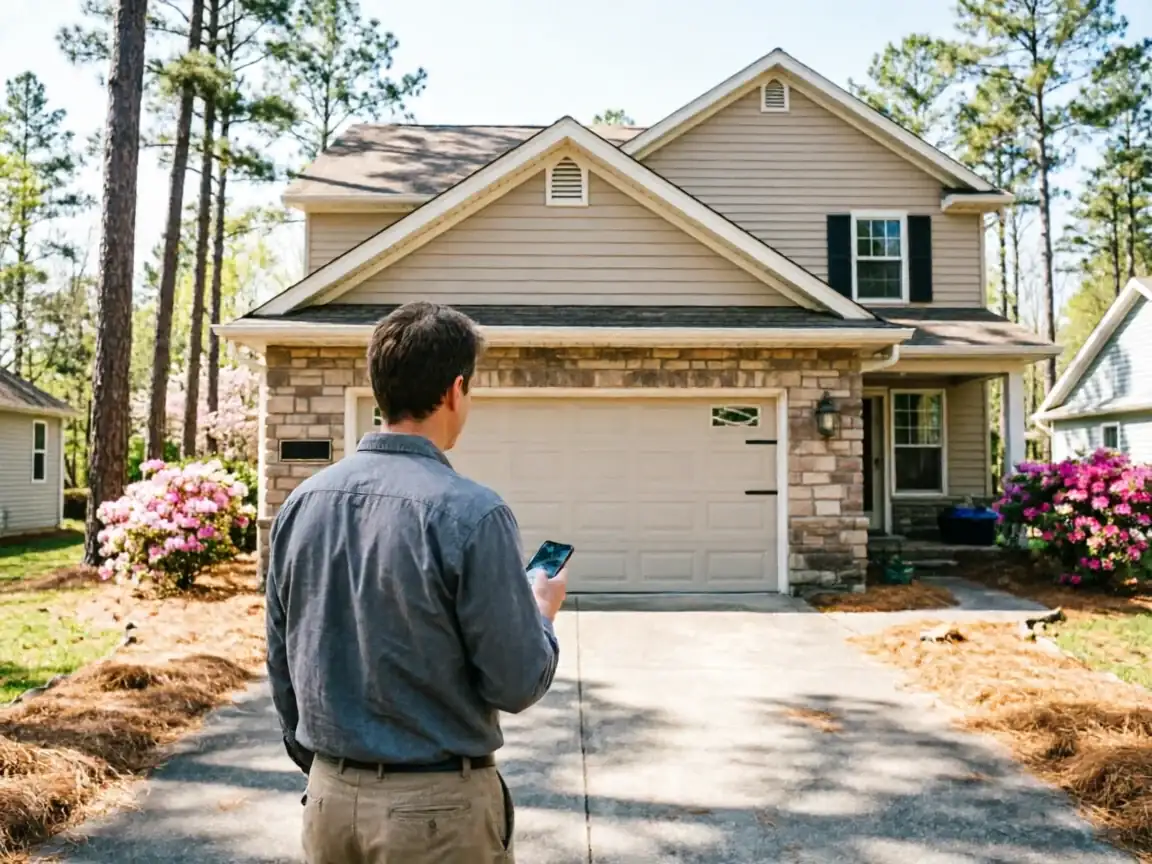
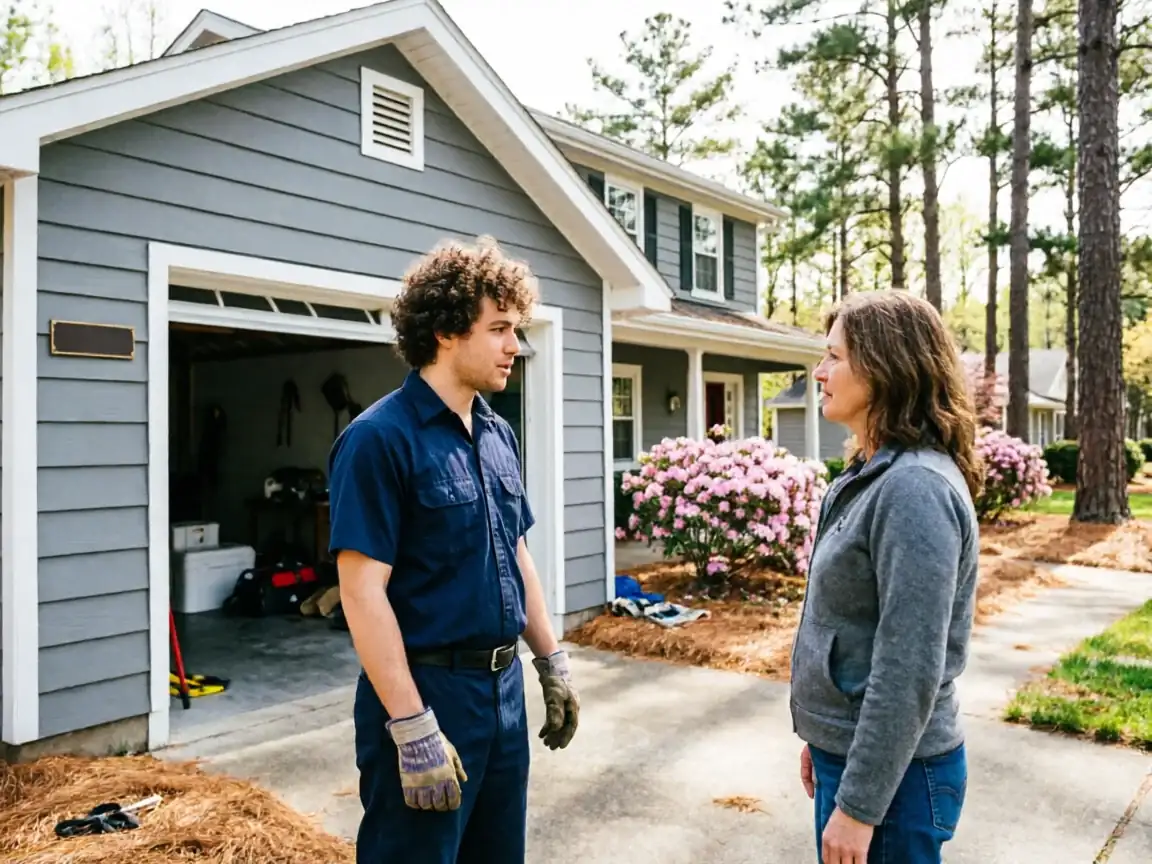
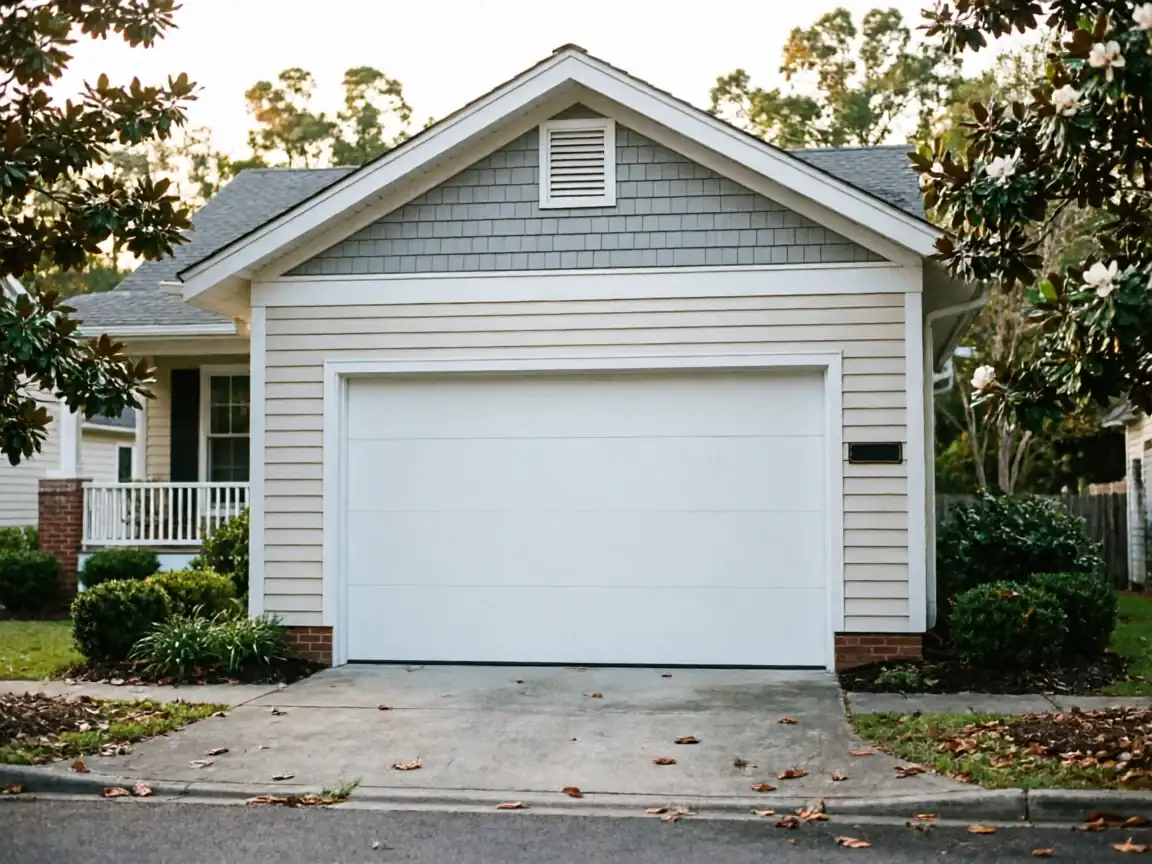
Across the service area - from the newer construction near Latitude Margaritaville Hilton Head a few miles out, back to the older neighborhoods closer in - you've got a real spread of door ages sitting inside a fairly narrow construction window, 1988 to 2013. That matters because it means most of the doors we see aren't failing from one bad event, they're failing from two or three decades of mild humidity and the occasional freeze doing slow, steady work on springs and track hardware. With roughly 5,108 owner-occupied houses in the service area, that adds up to a lot of doors sitting right in the zone where a homeowner has to decide fix or replace. There's no universal answer - a door on a 2008-built house with one bad roller is a different conversation than one on a 1991 house with three failing components at once. That's the judgment call worth getting an actual look at before you spend money either direction.
Straight answers about garage door repair in Bluffton. Still unsure? Ask us directly.
My garage door is from when the house was built in the early 90s - is it too old to fix?
Not necessarily. A door from that era can still be solid if it's only showing one issue, like a spring or a roller. The concern is when several parts are failing at once - that's usually the sign the door's reached the end of its practical life rather than needing a single repair.
Does Bluffton's climate actually affect garage doors much?
It's mild most of the year, which is easier on hardware than a true cold climate, but the humidity speeds up rust on untreated steel tracks and hinges, and the handful of freezing nights each winter can stiffen grease and crack old weatherstripping. It's gradual wear, not sudden damage.
How do I know if I should repair or replace?
Look at how many things are wrong at once. One bad spring or a dented panel on an otherwise working door is worth fixing. A door with an aging opener, worn springs, and rusted track together is usually cheaper to replace than to repair piece by piece.