The Cost of This Job
Ridgeland is a small town by the numbers
926 households total, which is a fraction of what we see in the bigger pockets of the service area. That matters for pricing because off-track jobs here aren't high-volume, cookie-cutter calls. Each one usually means a truck making the 18-mile drive from Bluffton for a single door, not a route with three stops on the same street.
- 926 households
We don't have a published flat rate for off-track repair to quote you here
And we won't invent one. What drives the cost is what knocked the door off in the first place: a bent track section, a snapped cable, or rollers that finally gave out after years of use. A door that's simply out of alignment is a quicker fix than one where the track itself is bent or the bottom bracket pulled loose. Until someone looks at the door in person, any number is a guess, and we'd rather tell you that than make one up.
What we can tell you is that Ridgeland's housing stock centers on 1997
A good 20-plus years newer than the oldest pockets in the wider area. That means less of the original low-grade hardware and more doors with steel rollers and factory track brackets - parts that are generally still available, which keeps repair costs more predictable than on much older housing.
Can You Do This Yourself
If one side of the door has popped out of the track and the door is sitting at an angle, do not force it back in and do not keep hitting the opener button. That's the single most common way a homeowner turns a $200 repair into a door replacement. The cables and the torsion spring are under real tension, and a door hanging crooked on one track can come down.
What you can safely do: pull the emergency release cord so the opener isn't fighting the door, and leave the door wherever it stopped. If it's down and off-track, leave it down. If it's up and off-track, don't try to lower it by hand past the point of resistance.
We'll be straight about the limitation here - we're not a 24-hour emergency crew, and we're not based in Ridgeland, so if your door is blocking a car in and it's urgent same-day, you should know that going in. For most off-track situations, though, the door isn't actually dangerous sitting still; it's dangerous if someone keeps operating it. Switch off the opener at the breaker if you're worried about someone hitting the button by habit, and wait for a tech to look at the track and rollers before anything gets forced back into place.
Parts We Carry
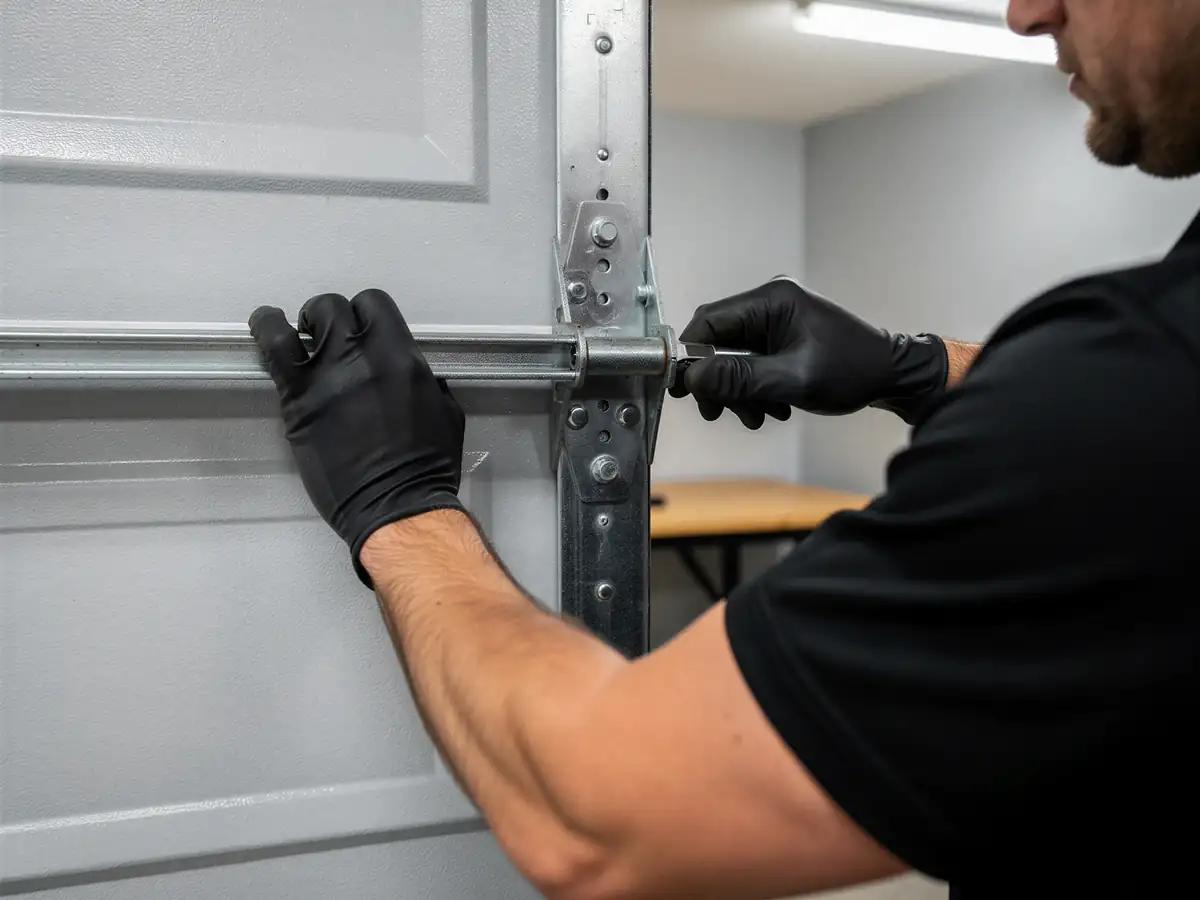
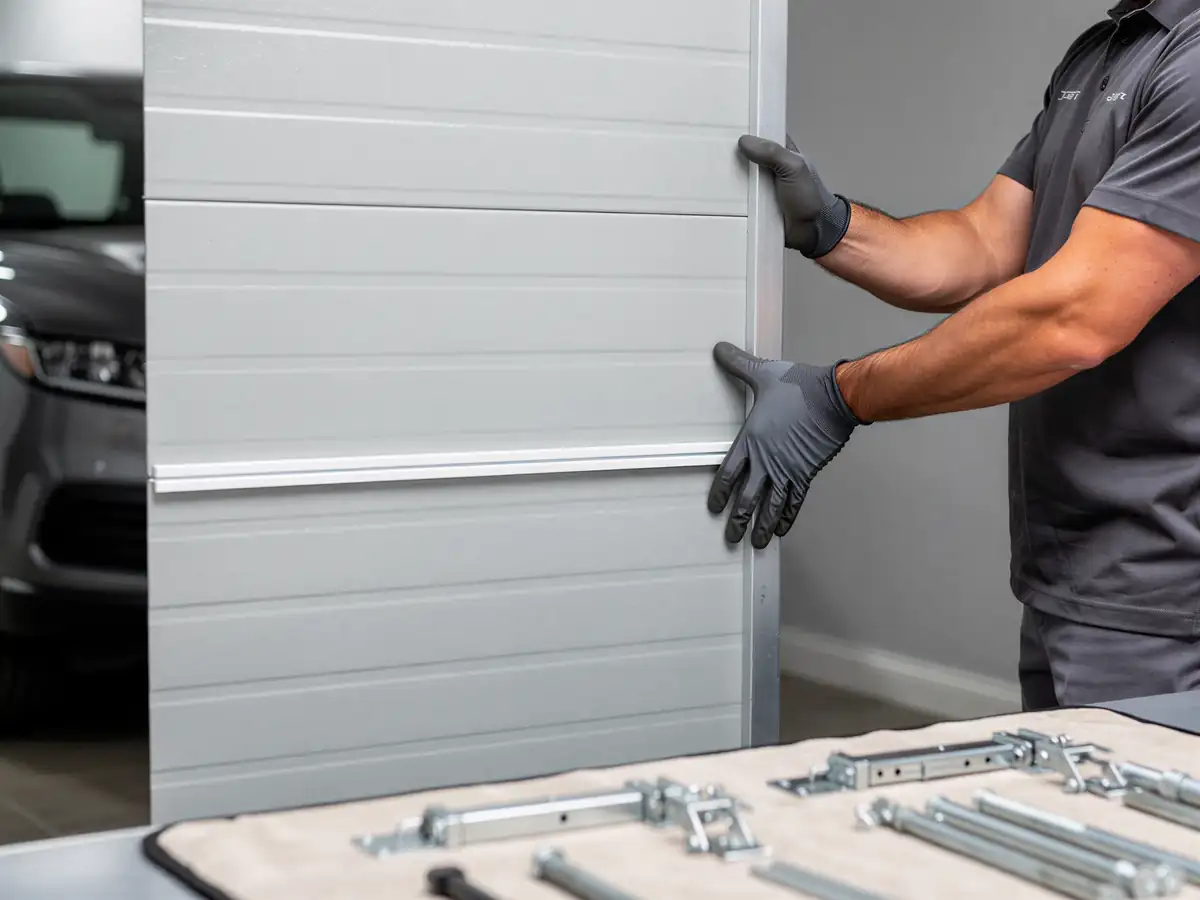
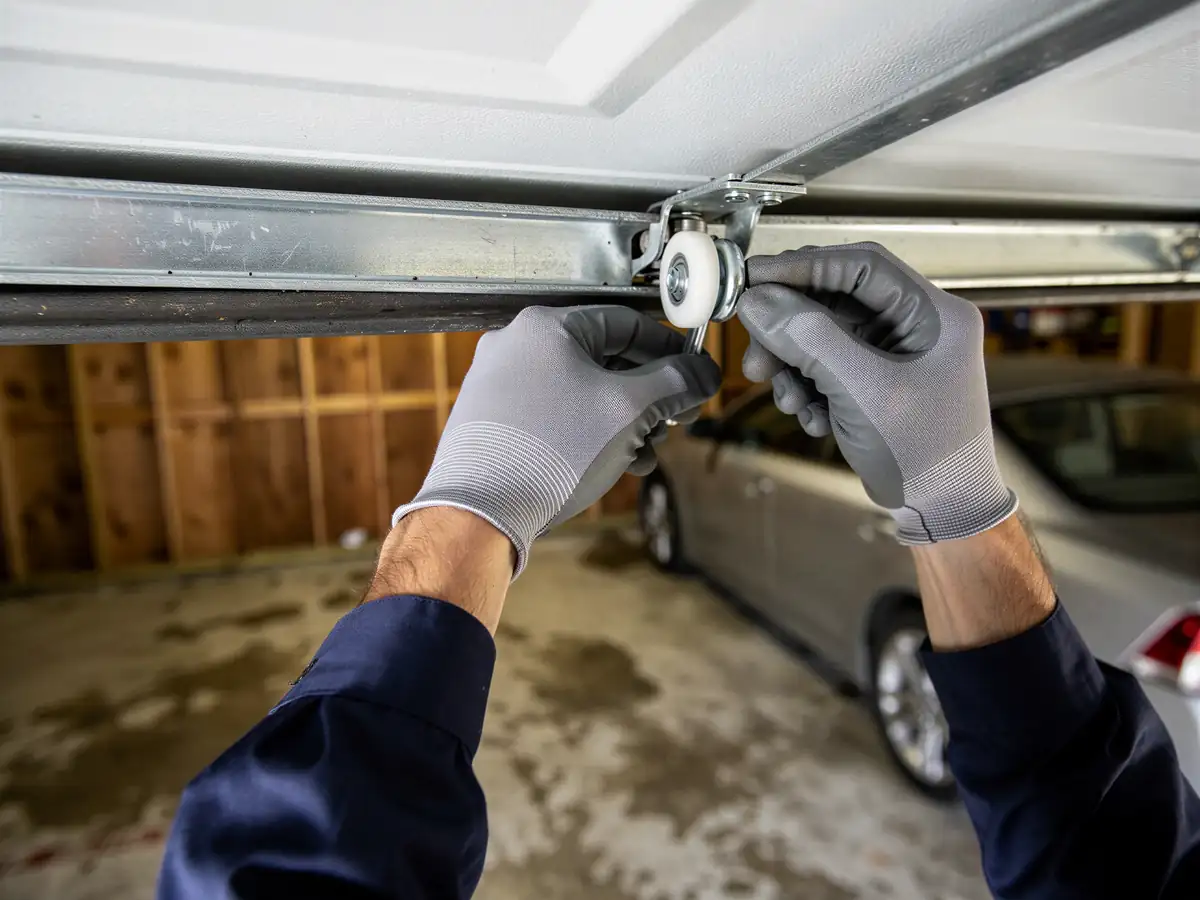
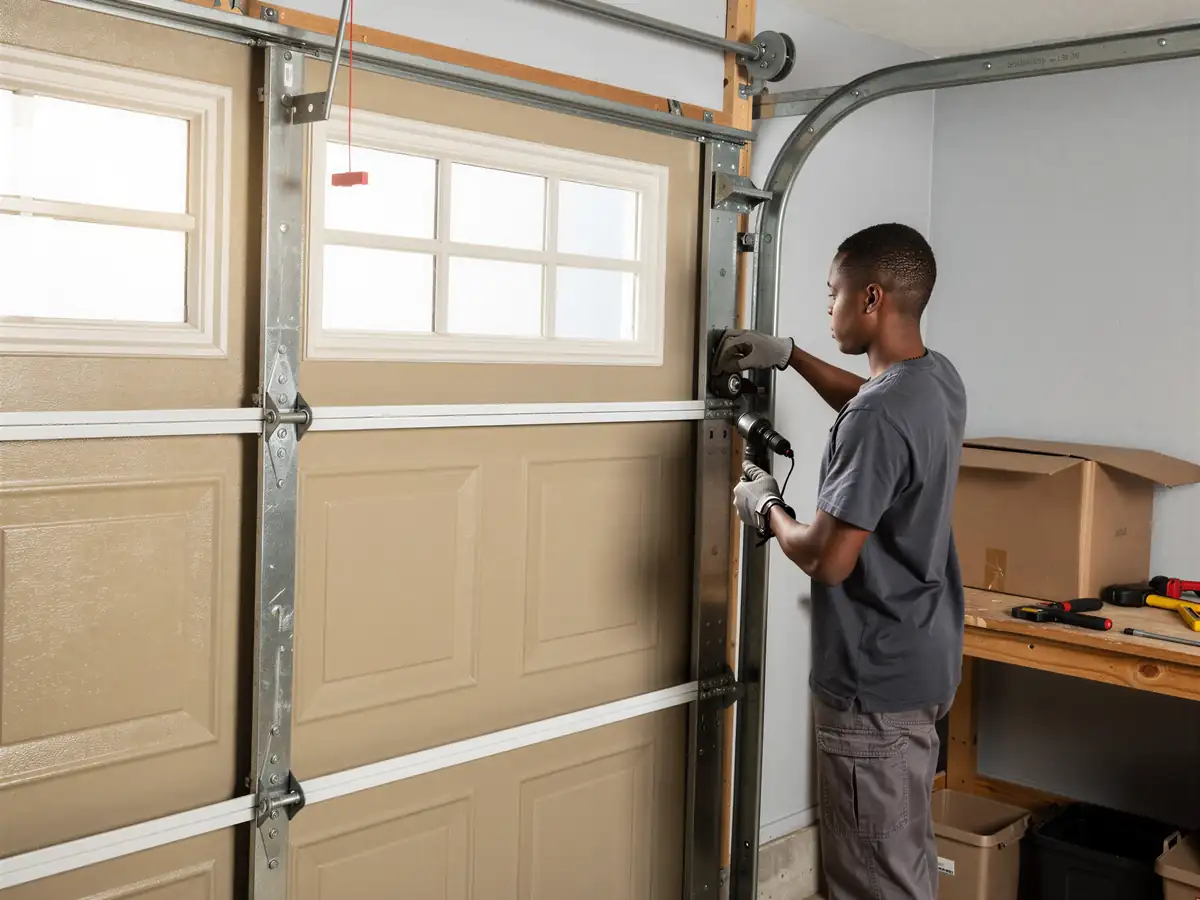
On Ridgeland doors built around 1997, the track and roller setup is standard torsion-spring hardware - galvanized steel rails, ball-bearing or nylon rollers, and a bottom bracket that bolts through the door's end stile. We carry replacement rollers, track sections, and bottom brackets sized for this generation of door, since it's common across most of the 1980s-and-90s housing that makes up the surrounding area.
What we don't stock on the truck is anything custom - a non-standard track width or a specialty bracket from a door model that's been discontinued. If your door turns out to need one of those, we'll tell you it's a special-order part rather than pretend we have it in the van, and that means a short wait before the job finishes.
For a door that's off-track because a roller sheared or a track bracket pulled out of the framing, these are parts we replace often enough that there's no guessing involved. For anything stranger - a track that's been bent into a shape it shouldn't hold, for instance - straightening it on-site sometimes isn't worth it, and swapping the section is the more honest fix even though it costs a bit more.
Why It Happens Here
Ridgeland sits in a mild climate band with only occasional freeze
Which doesn't put the same stress on garage door hardware as a true freeze-thaw region. But mild doesn't mean no stress at all - steel track brackets and roller stems still expand and contract a little with seasonal temperature swings, and over nearly 30 years that's enough cycles to loosen a bracket bolt or wear a roller stem thin, especially on the door's weaker, non-motor side.
- 30 years
The other driver is simple wear from use
A door built around 1997 that's been run daily for over two decades has rollers that have made tens of thousands of trips through the same track, and nylon rollers in particular degrade with age even without a dramatic failure. One roller finally breaking under a slightly misaligned bracket is often enough to pop a door off-track on an otherwise unremarkable day - no storm, no impact, just accumulated wear catching up.
We see this pattern across the wider service area too
Where most homes were built between 1988 and 2013. Ridgeland's own stock runs a bit newer on average, which is part of why the failures we see here tend to be wear-related rather than the rusted-through hardware we find on the oldest houses in other parts of the area.