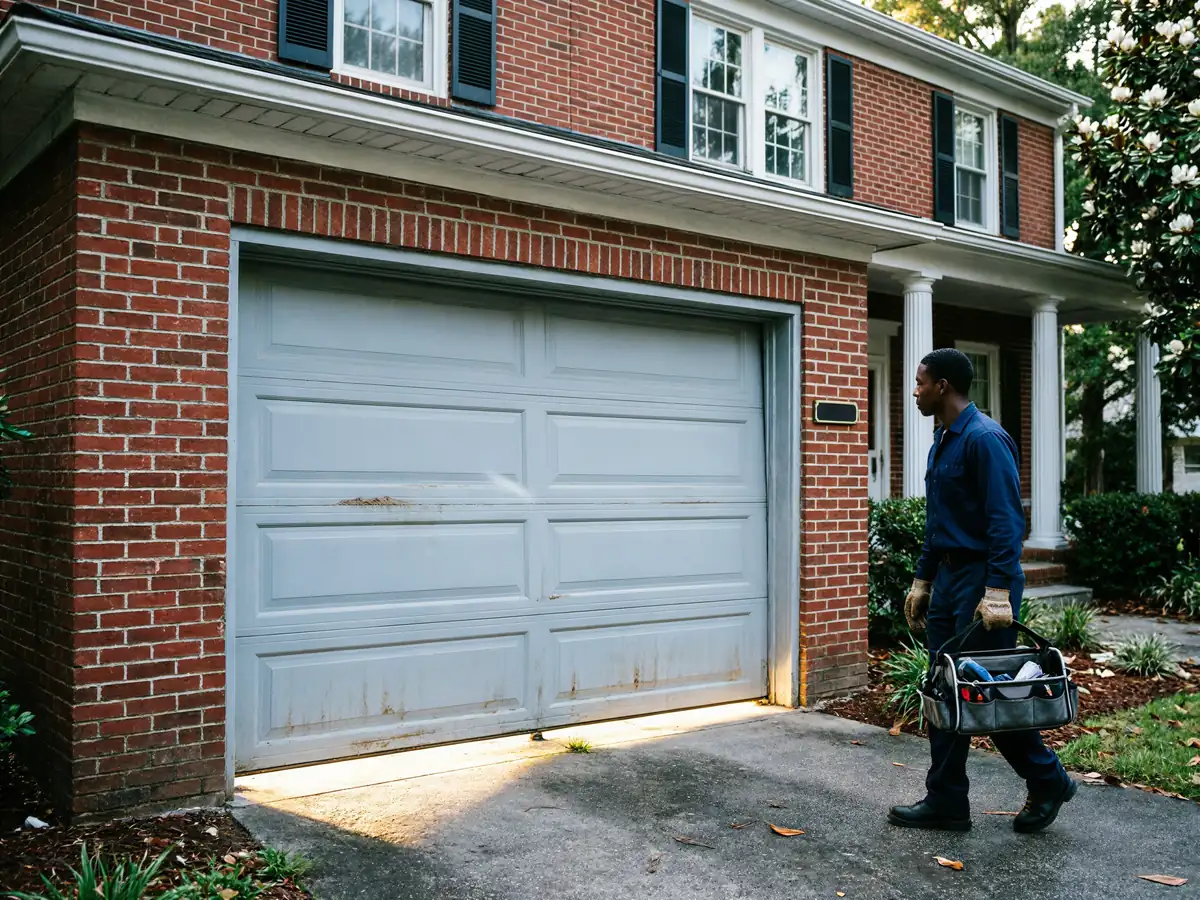
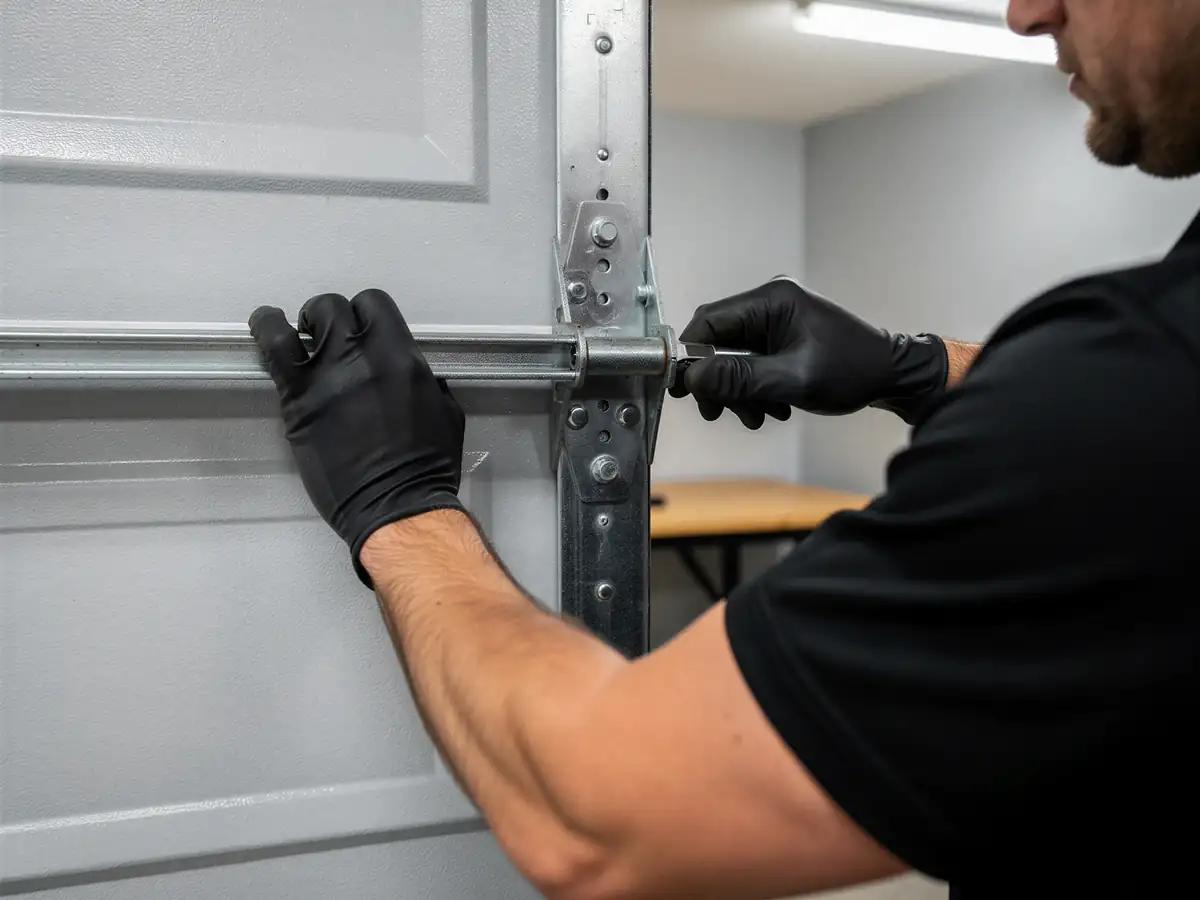
The Cost of This Job
Burton is a smaller pocket of the service area
2,606 households, compared to the roughly 15,800 across the territory we cover out of Bluffton. That size matters for how a repair call plays out here: fewer jobs come out of this stretch in a given month, but the ones that do tend to look alike, because the houses went up around the same years.
- 2,606 households
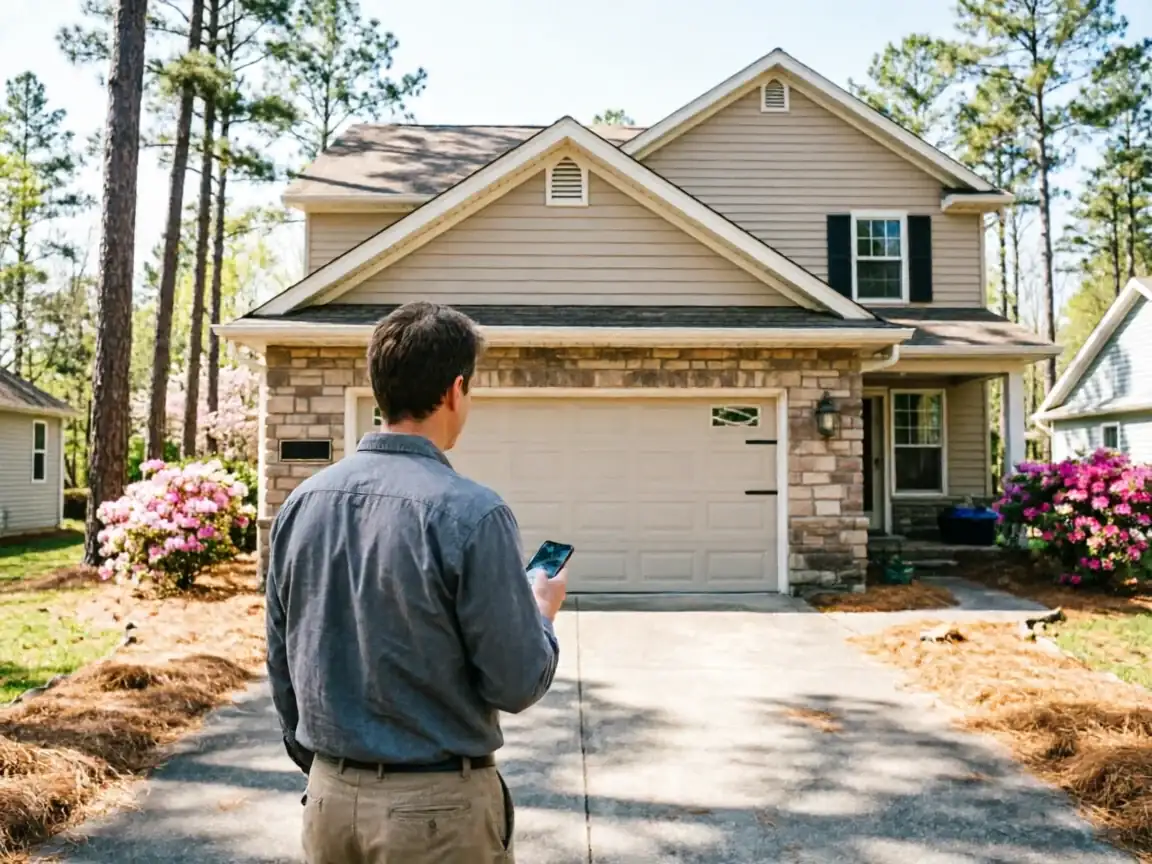
The median home in Burton was built in 1988
About six years ahead of the wider service area's median of 1994. That earlier build date means more of the original torsion hardware, more extension-spring setups on older single doors, and openers that are now well past the age where parts show up on a shelf.
What a repair costs depends on what's actually failed
A snapped cable, a worn roller, a dead circuit board - and we don't quote a number sight unseen. Burton's median household income, at $57,315, runs noticeably below the service area's overall $68,085, and we try to be straight about what's worth fixing versus what's worth replacing before any work starts. We're honest that a same-day visit isn't something we promise from 18 miles out; we schedule the trip, we don't drop everything.
- 18 miles
Parts We Carry
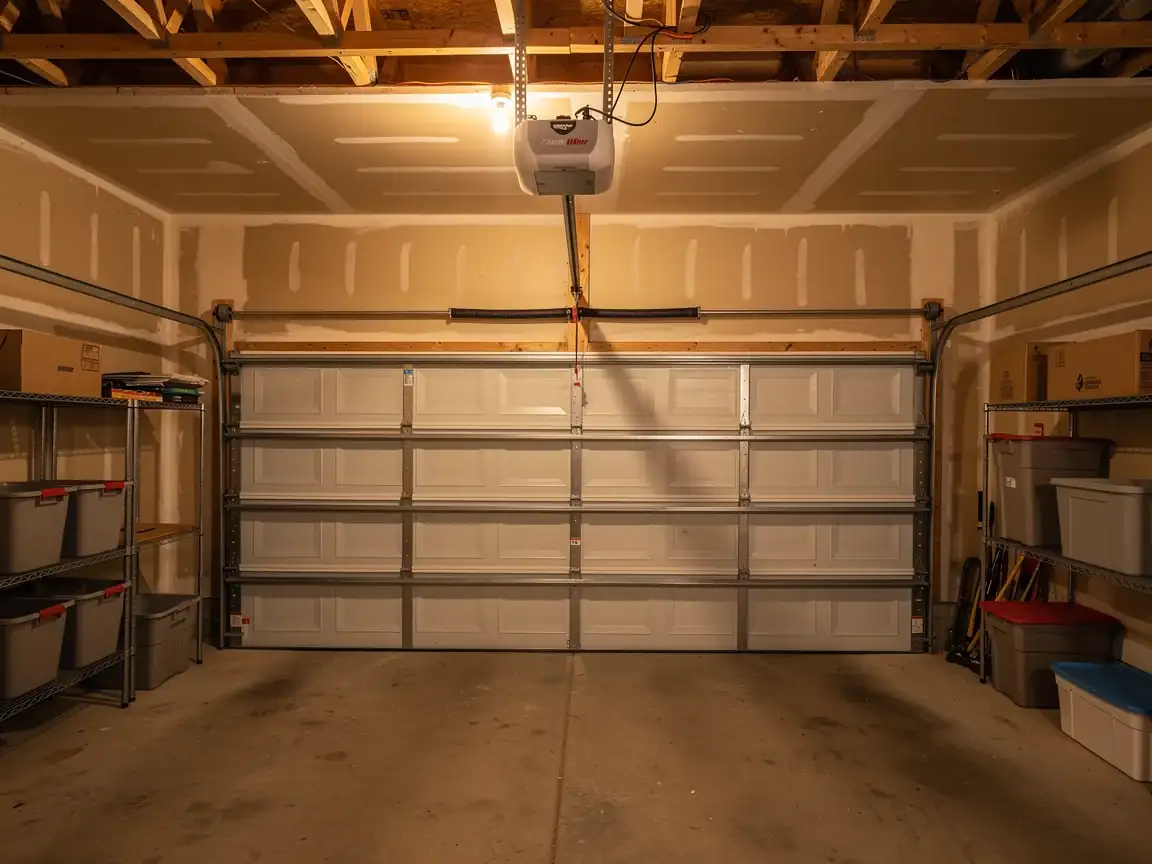
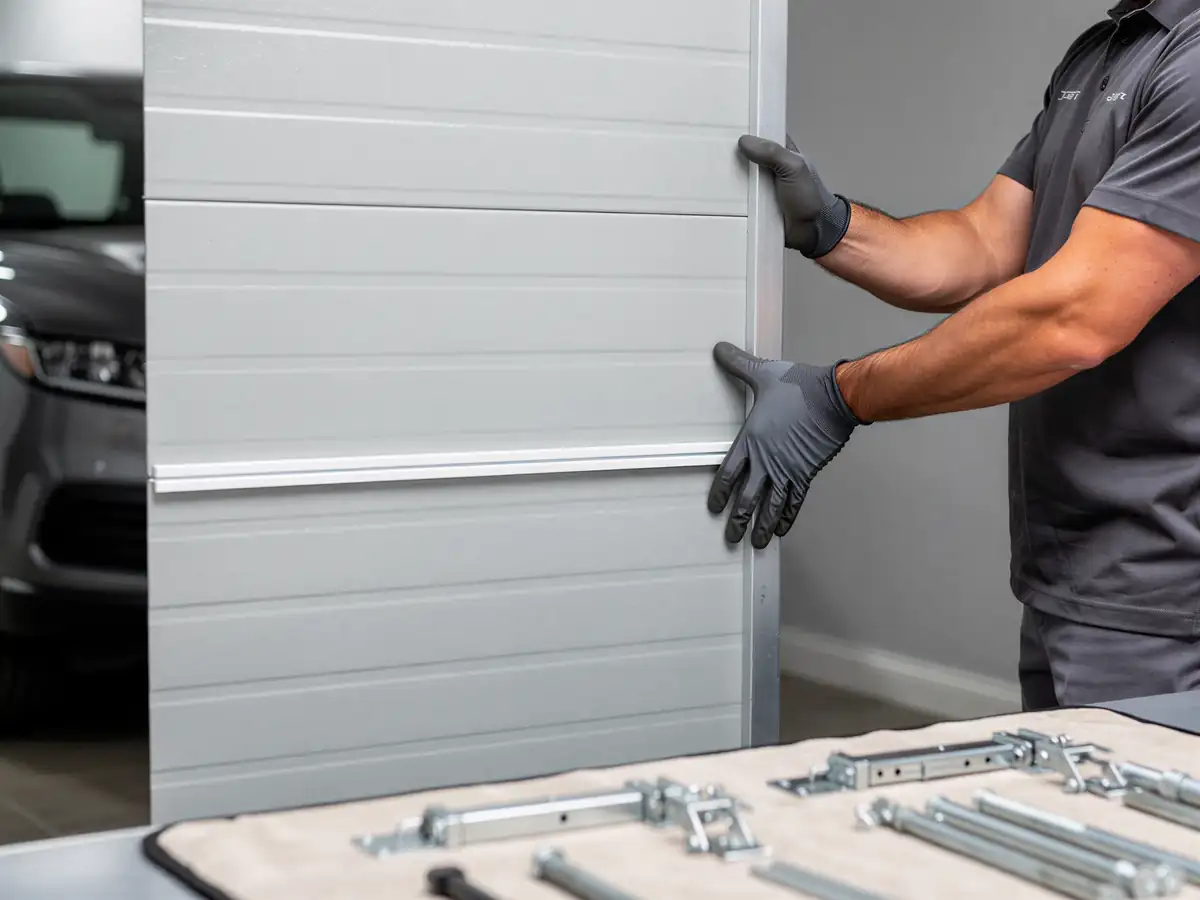
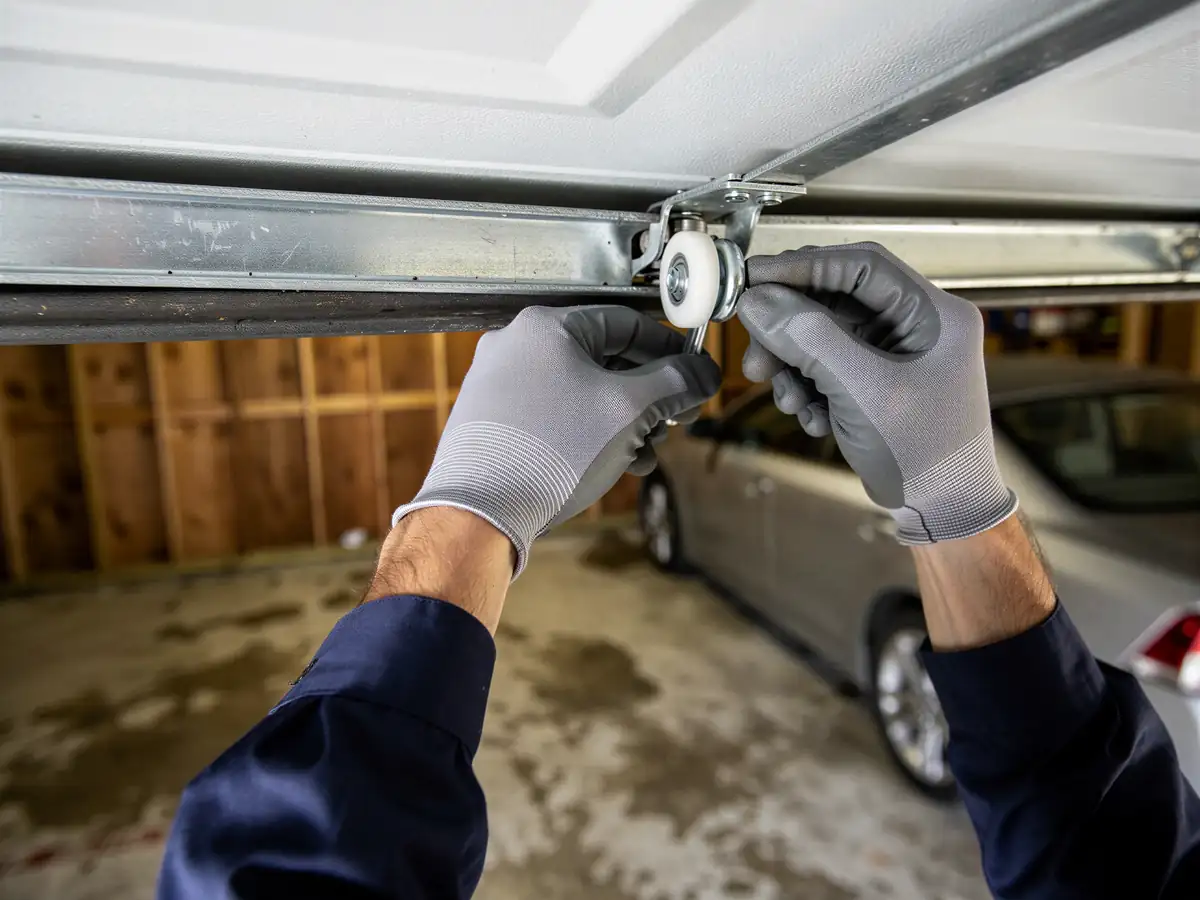
On a truck headed to Burton, the parts that matter most are the ones that fit a house built in the late 1980s: torsion springs sized for older single and double doors, extension-spring kits for the setups that never got upgraded, and standard steel rollers and hinges that wear out on a 30-plus-year-old door regardless of brand.
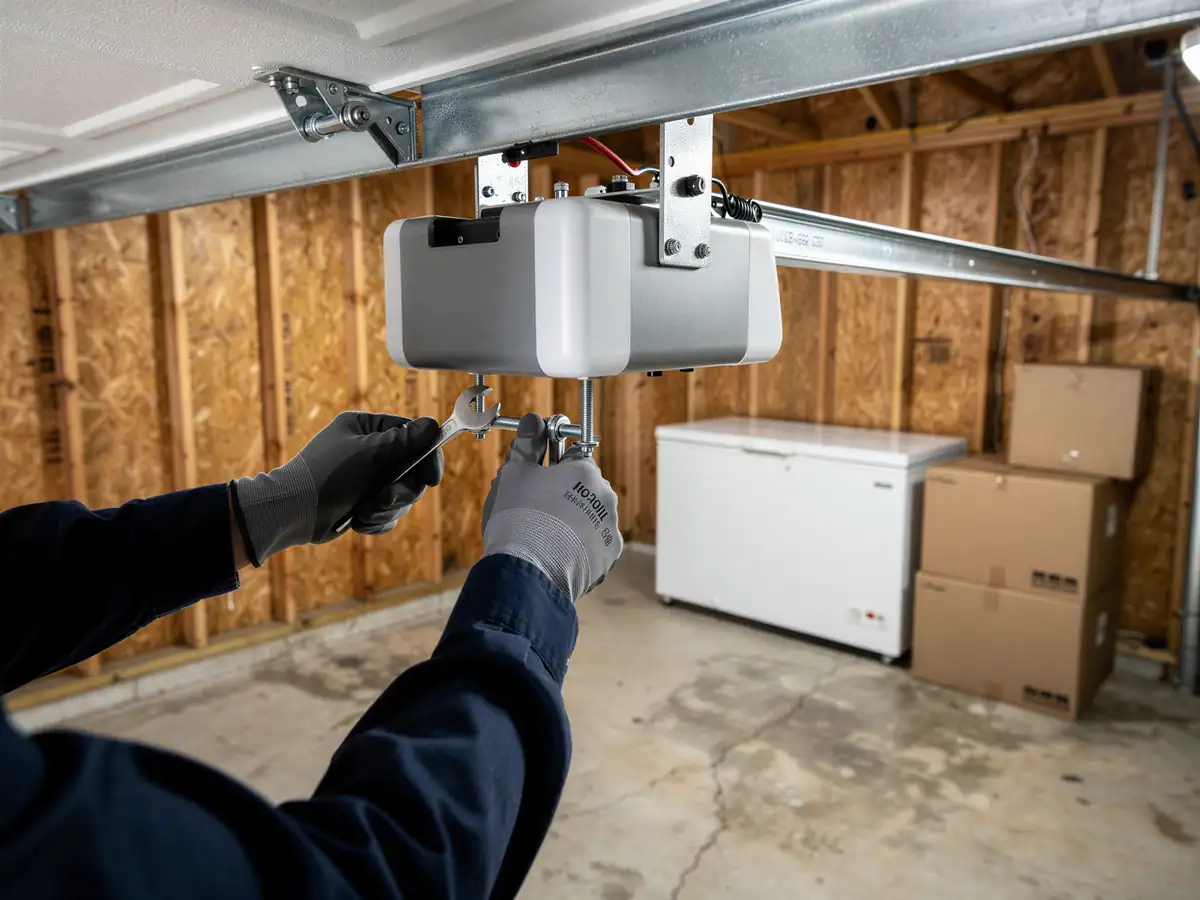
Openers from that build era are usually chain-drive, and a lot of them have outlived the manufacturer's own parts support. We carry logic boards and drive gears that cover most of what was common in houses from that period, but we won't pretend every obsolete opener has a drop-in replacement part sitting on the truck. Sometimes the honest answer is that the opener itself needs replacing rather than patching.
Cables, bottom brackets, and weatherstripping round out what gets used most. None of it is exotic - it's the stuff that fails first on a door that's been opening and closing every day since the first Bush administration.
Can You Do This Yourself
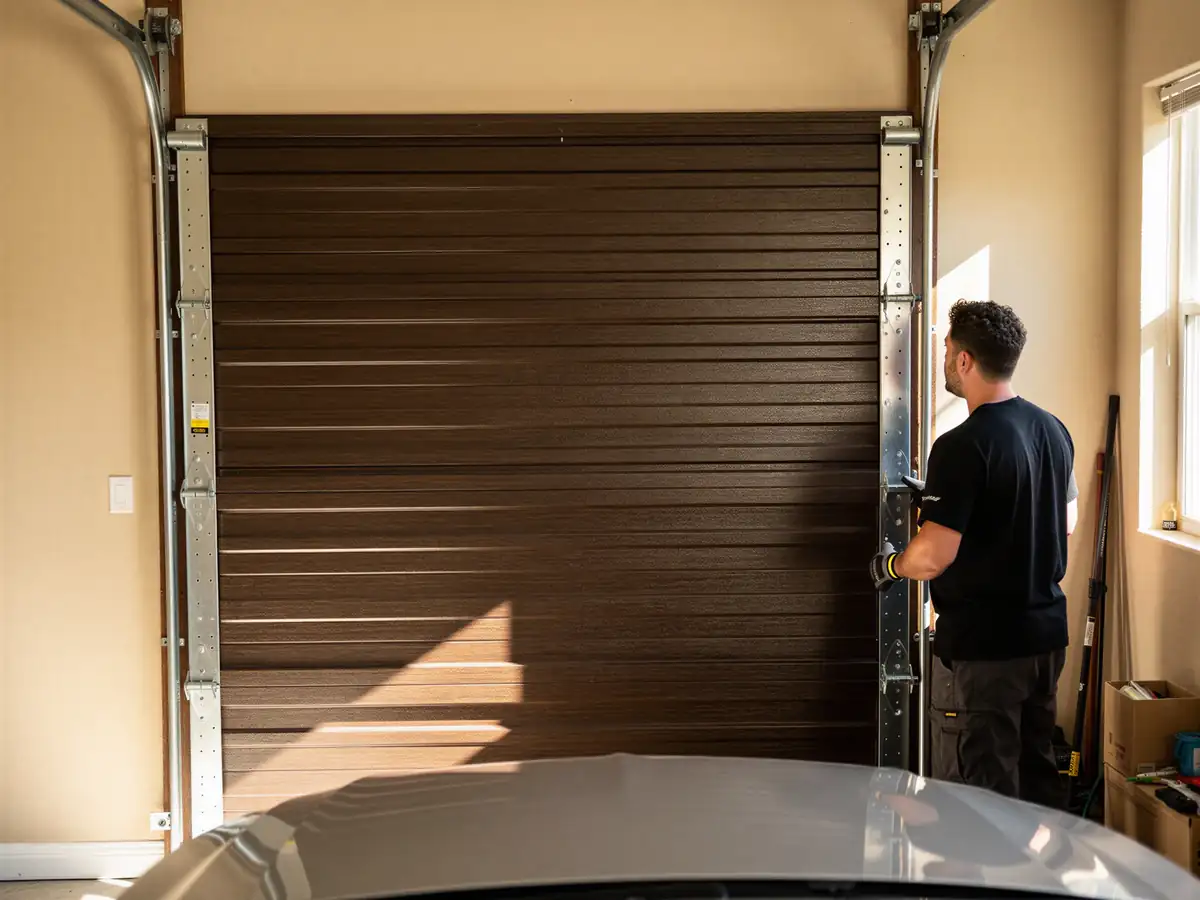
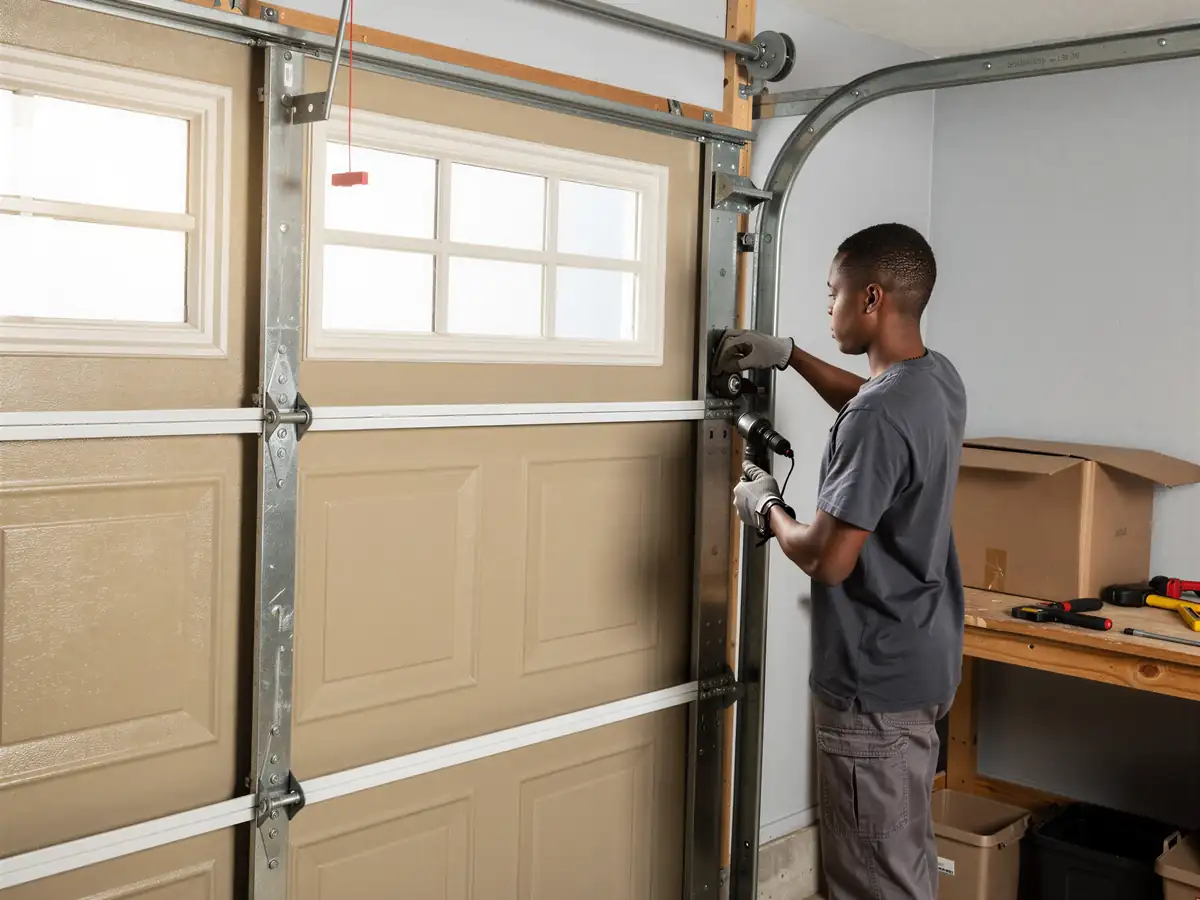
Some of it, yes. Swapping a roller, tightening a loose hinge, lubricating a track - that's homeowner work and there's no reason to pay someone to drive 18 miles for it.
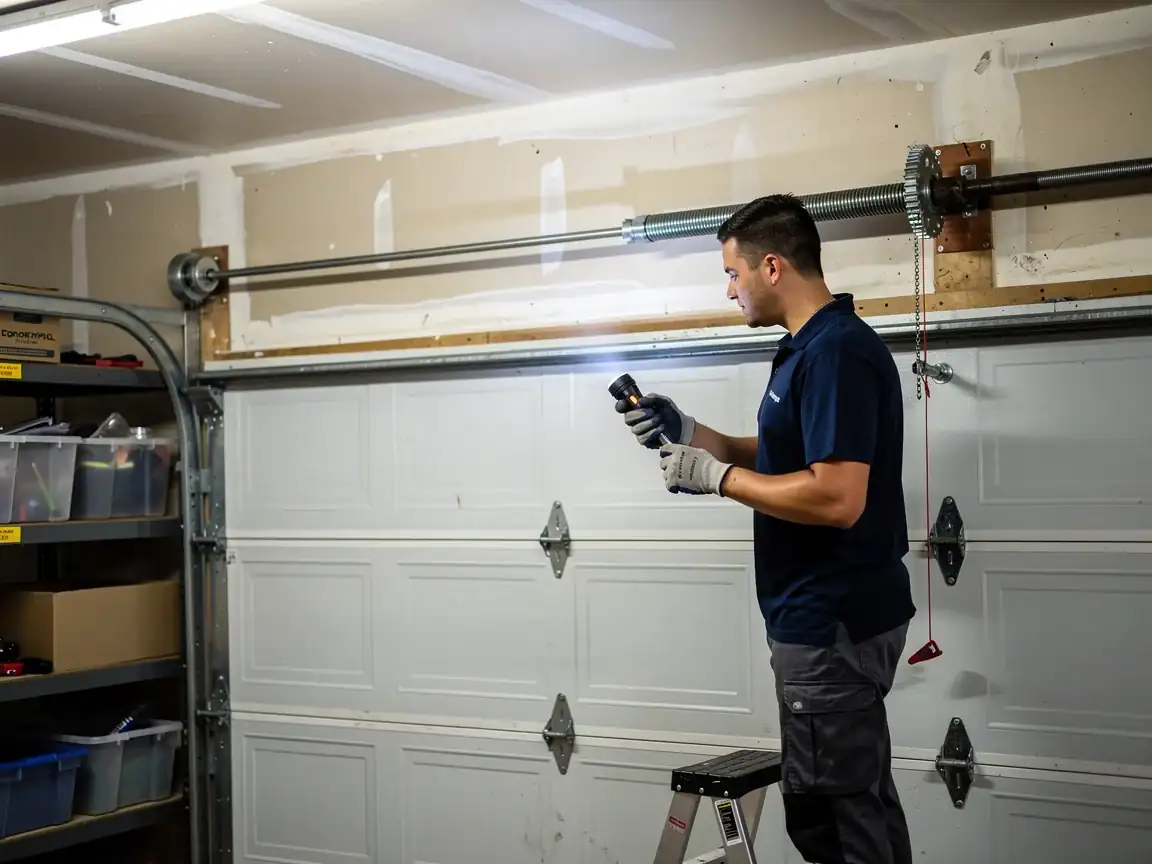
A torsion spring is a different matter. On a door built the way most of Burton's are, that spring is wound under enough tension to break a hand or worse if the winding bars slip, and the setups from this era often don't have the safety cable that newer doors carry. We won't talk anyone through doing that one alone.
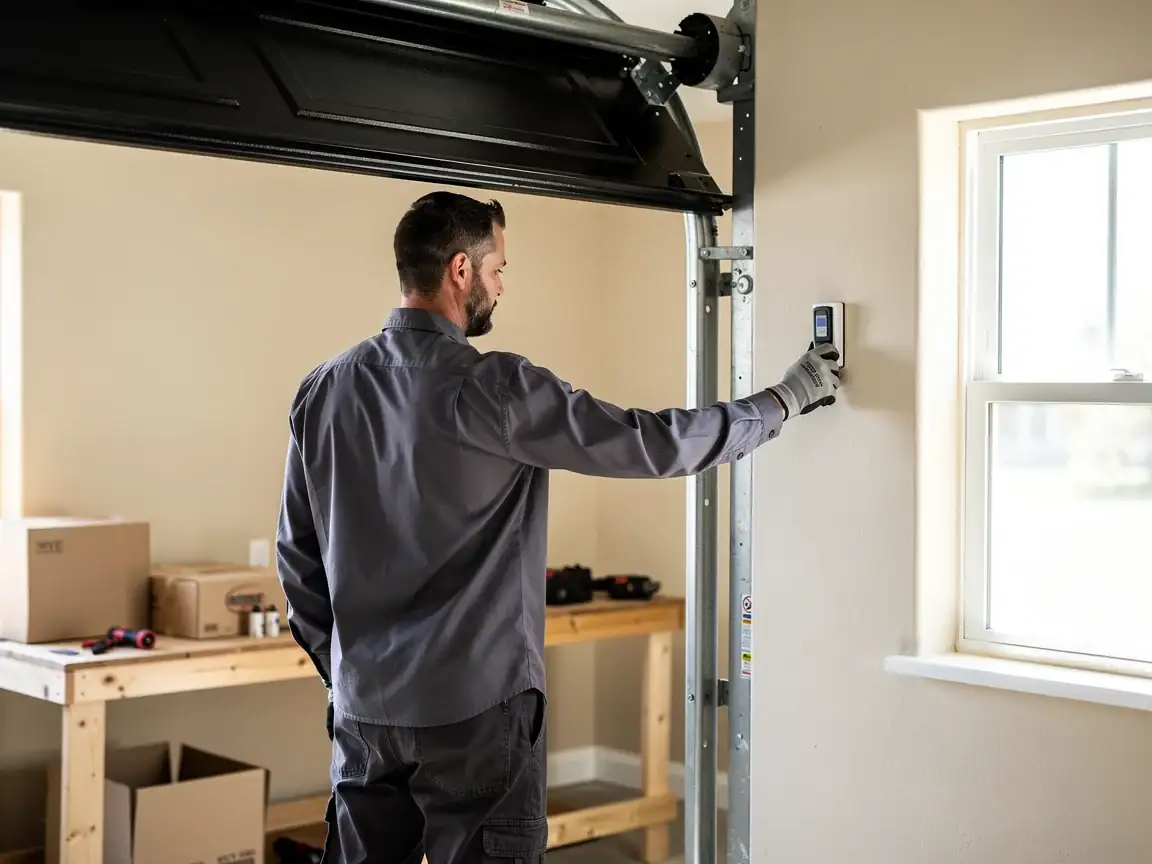
Opener wiring and circuit board swaps sit in between - doable if you're comfortable with a multimeter, risky if you're not sure what you're looking at. If the opener is original to a 1988 build, our honest advice is usually to replace it rather than chase parts for a board that's been discontinued for years.
What Can Go Wrong
The climate here sits in a mild band with occasional freeze nights
Which isn't the kind of extreme that cracks concrete slabs or warps steel panels the way harder winters do elsewhere. But it still does enough - a cold snap tightens steel, stiffens old lubricant, and that's often when a spring that was already fatigued finally lets go.
On Burton's older stock, the most common failures are springs that have simply outlived their cycle count
Cables fraying at the bottom bracket, and openers whose logic boards fail after decades of humidity swings. Panels dent and tracks bend out of alignment the same as anywhere, but on a door this age the bigger risk is a part nobody makes anymore forcing a full replacement instead of a simple fix.
We'd rather tell a homeowner up front that a 1988-era door is close to the end of its service life than sell a patch job that fails again in six months