The Cost of This Job
Most garage doors in Burton sit on openers that went in when the house did
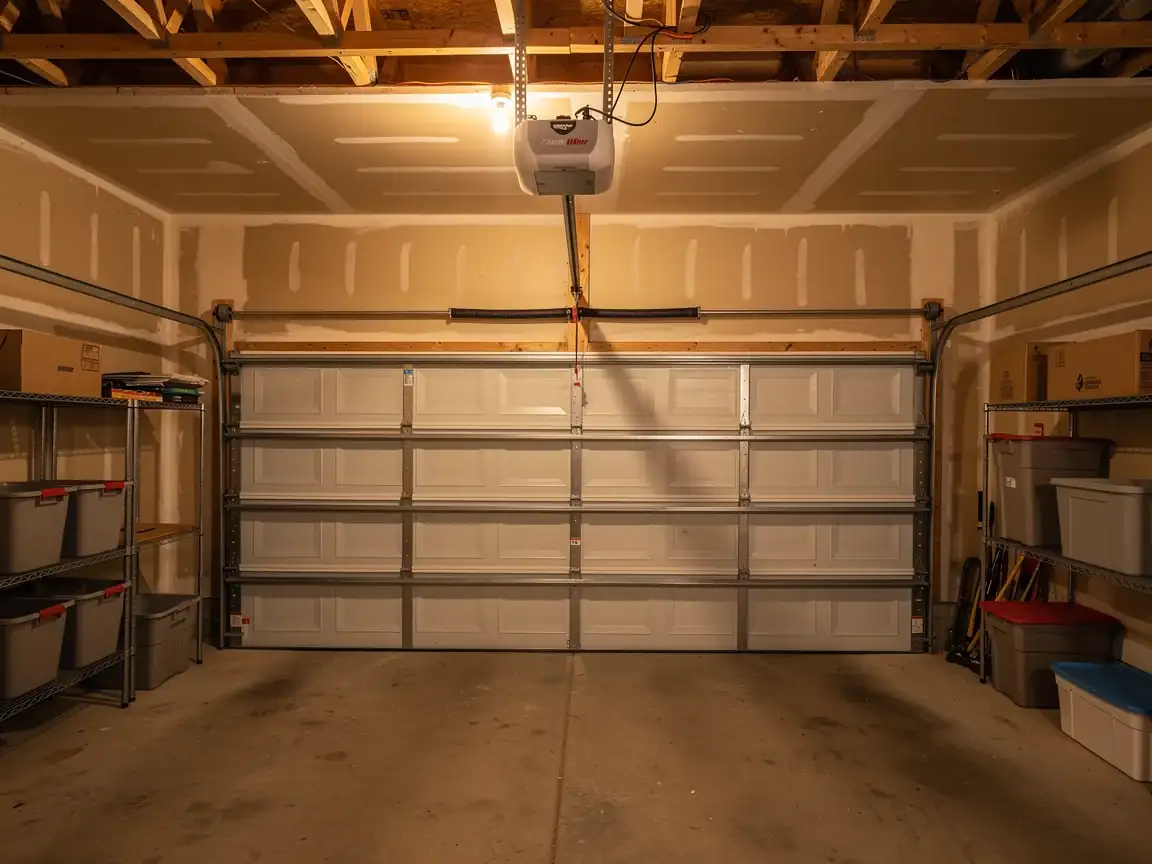
And that's typically 1988 or close to it. That's a steel sectional door, usually a single 16-foot double or a 9-foot single, hung on a chain-drive opener built for a house that cost a fraction of what it's worth now. The chain is loud, the rail sags a little, and the logic board inside has no safety reverse sensors worth trusting.
At a median household income of $57,315 across Burton
We don't push you toward the opener with the camera and the app unless you actually want it. A straightforward belt-drive or chain-drive replacement, sized to the door you already have, covers almost every call out this way. What drives the final number is mostly the door itself - whether the existing track and springs are sound enough to keep, or whether the opener failure is really a symptom of a spring or cable problem that needs fixing first. We won't quote a number here we can't back up without seeing the door, but we won't pad the job either.
- $57,315 median household income
One honest limitation
If your opener is a specialty or smart-home brand tied into a whole-house system, parts can take longer to source than a standard chain or belt unit, and we'll tell you that up front instead of guessing at a delivery date.
Parts We Carry
We keep standard chain-drive and belt-drive openers on the truck, sized for the door spans common to Burton's 1988-era stock - single and double garages built before anyone thought to put a side-mount opener on a two-car door. Universal remotes and keypads that pair with most existing rail and header brackets are standard stock too, since swapping those out is most of what a Burton call looks like.
What we don't carry as a rule: proprietary smart-hub openers tied to a single manufacturer's app ecosystem. If you want one of those specifically, we can order it, but it's a special-order part, not something sitting in the truck, and that adds lead time we're upfront about rather than promising a same-visit install we can't deliver.
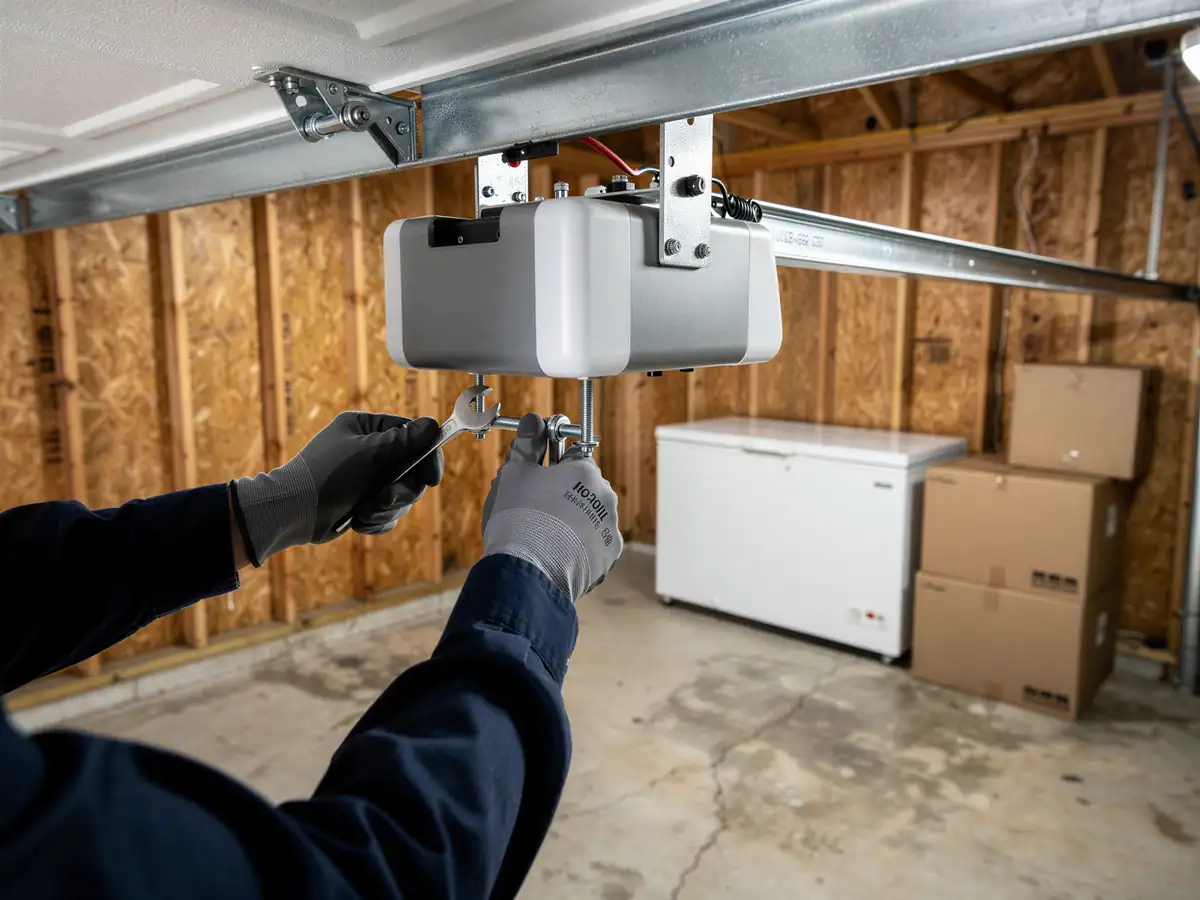
We also carry the header brackets and mounting hardware that often need replacing alongside the opener itself - on a door this old, the wood backing the bracket has usually taken thirty-plus years of vibration, and reusing a stripped-out bracket just means a second call in a year. Bringing the right hardware the first time is the difference between one visit and two.
Can You Do This Yourself
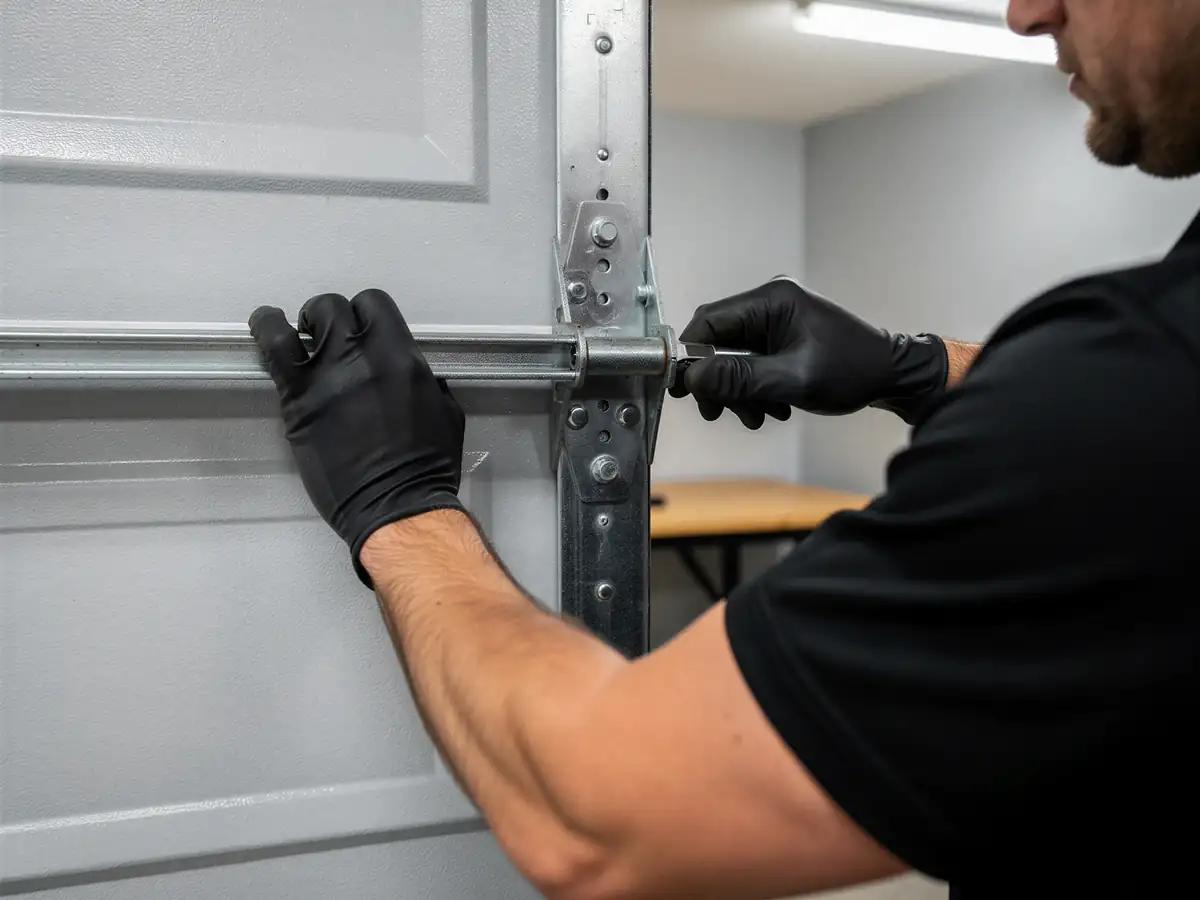
A chain-drive opener swap is within reach for a homeowner who's comfortable on a ladder and patient with wiring the safety sensors correctly - that part trips up more DIY installs than anything else, and a door that won't reverse on an obstruction isn't a door you want running unattended. The part that isn't a DIY job is anything involving the torsion spring overhead; that's stored energy that can break a hand or worse, and it has nothing to do with the opener itself even though the two often get replaced together.
If your current opener is original to a 1988-built house, the rail and header bracket are often as tired as the motor, and swapping just the head unit onto old hardware is how you end up back on a ladder in six months. Pairing a new opener's remote and keypad to an existing receiver is usually quick, but on units this old, the receiver itself may not accept a modern rolling-code remote at all, and that's a part, not a setting.
What Can Go Wrong
This part of the coast runs a mild climate with the occasional freeze
Which doesn't sound like much, but that swing in temperature is enough to shrink and expand a steel rail over three decades, which loosens the mounting bolts that hold the opener to the header. That's a common cause of the grinding or banging noise that gets blamed on the motor when the real fault is a bracket working itself loose.
On a house built around 1988, the second common failure is the drive gear inside the opener itself
A part that wears out on its own schedule regardless of how well the door is maintained, and once it strips, the opener runs but the door doesn't move. We see it most on original units that have never been serviced, which in Burton is still a fair number of houses.
Less common but worth naming
Openers wired directly into an old outlet with no GFCI protection. That's not an opener problem, it's an electrical one, and it's outside the scope of what we touch on an opener call - we'll flag it, not fix it.