The Cost of This Job
Burton sits about 18 miles from our shop in Bluffton
And that drive shapes how we quote and schedule this work. We don't run a branch out here, so a roller job gets booked as a dedicated trip rather than a quick add-on between calls closer to home. That means we try to confirm what your door needs before the truck leaves - roller count, track condition, whether the hinges are shot too - so the visit covers the actual repair instead of a diagnostic trip followed by a second one.
- 18 miles
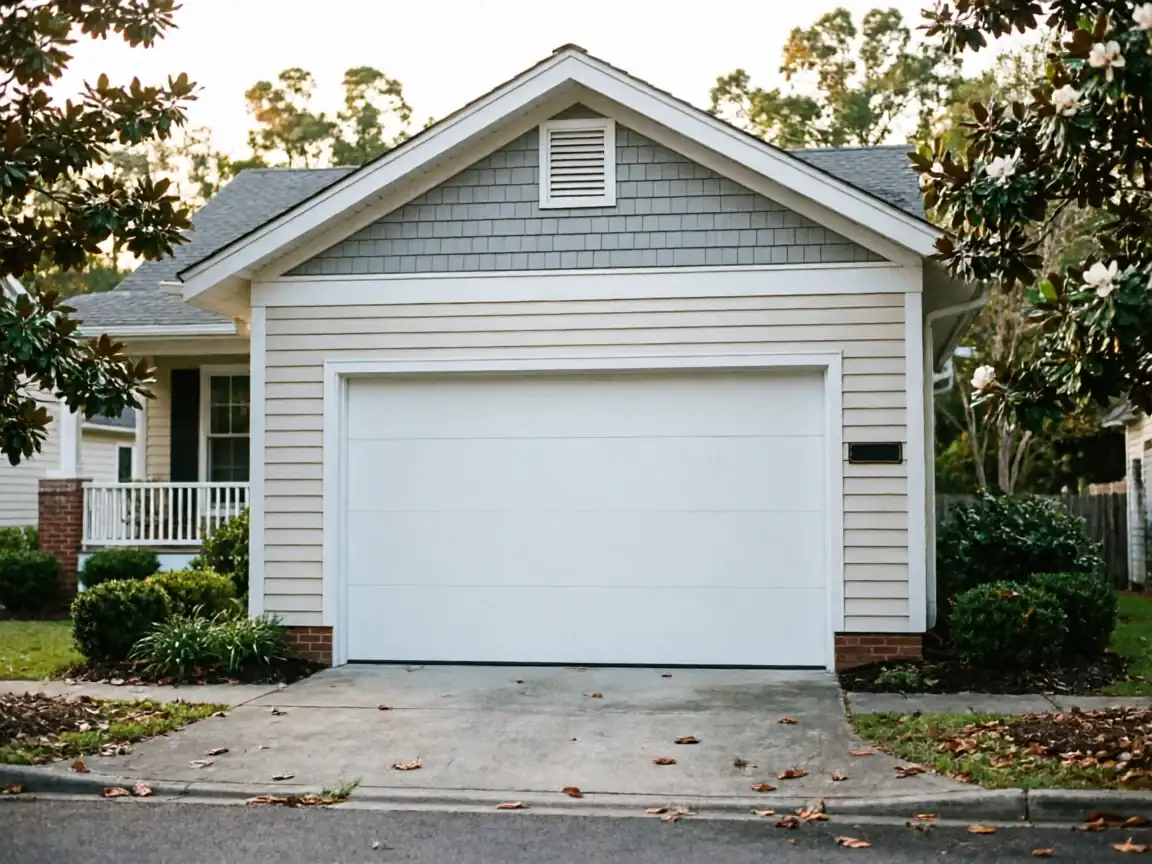
Most houses in Burton were built around 1988
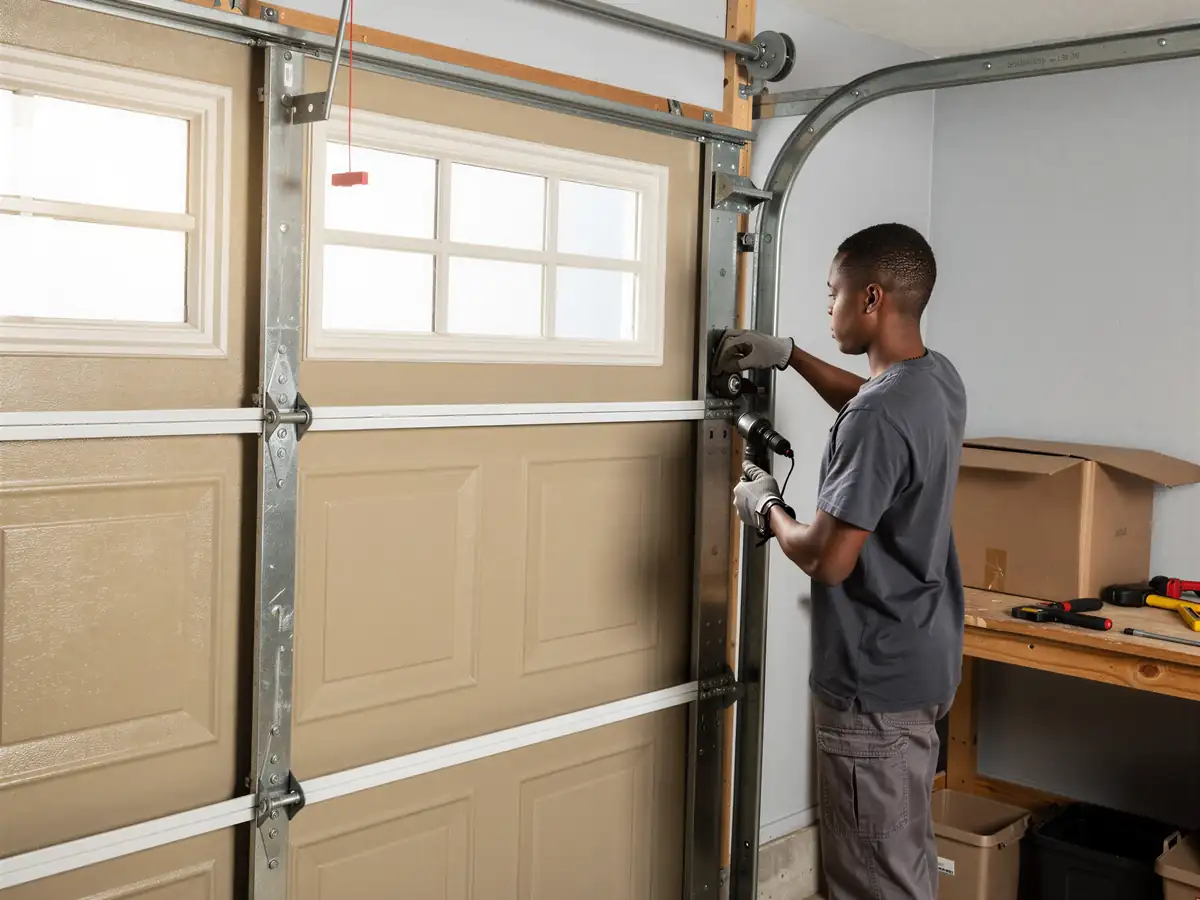
And a lot of that original hardware is still in service. Steel rollers from that era were fine for their first fifteen or twenty years, but after three-plus decades of daily cycles, the stems wear oval and the wheels flat-spot. Replacing a full set of ten rollers is a different job than swapping two bad ones on a track that's otherwise sound, and we price it that way rather than quoting a flat number that ignores what's actually hanging on your door. Median household income here runs $57,315, noticeably below the wider service area's $68,085, and we try to scope these jobs so you're not paying for parts you don't need.
Parts We Carry
For doors built around the late 1980s, the rollers that fail are usually the stamped-steel kind on a 7-ball or 10-ball bearing, mounted on a stem that's narrower than what newer doors use. We carry nylon rollers with sealed bearings as the standard replacement - quieter, and they don't develop the flat spots that steel rollers get over 35 years of opening and closing.
What we don't always have on the truck is an exact stem-length match for every builder-grade track bracket from that period. Some of the original hardware used nonstandard spacing that later manufacturers dropped, and if your bracket is one of those, we may need to order the right stem rather than force a modern one into an old slot. That's the honest limitation here: a same-day fix on a standard track is routine, but a mismatched bracket can mean a short wait on a part, and we'd rather tell you that up front than rush a fit that'll fail in a year.
Can You Do This Yourself
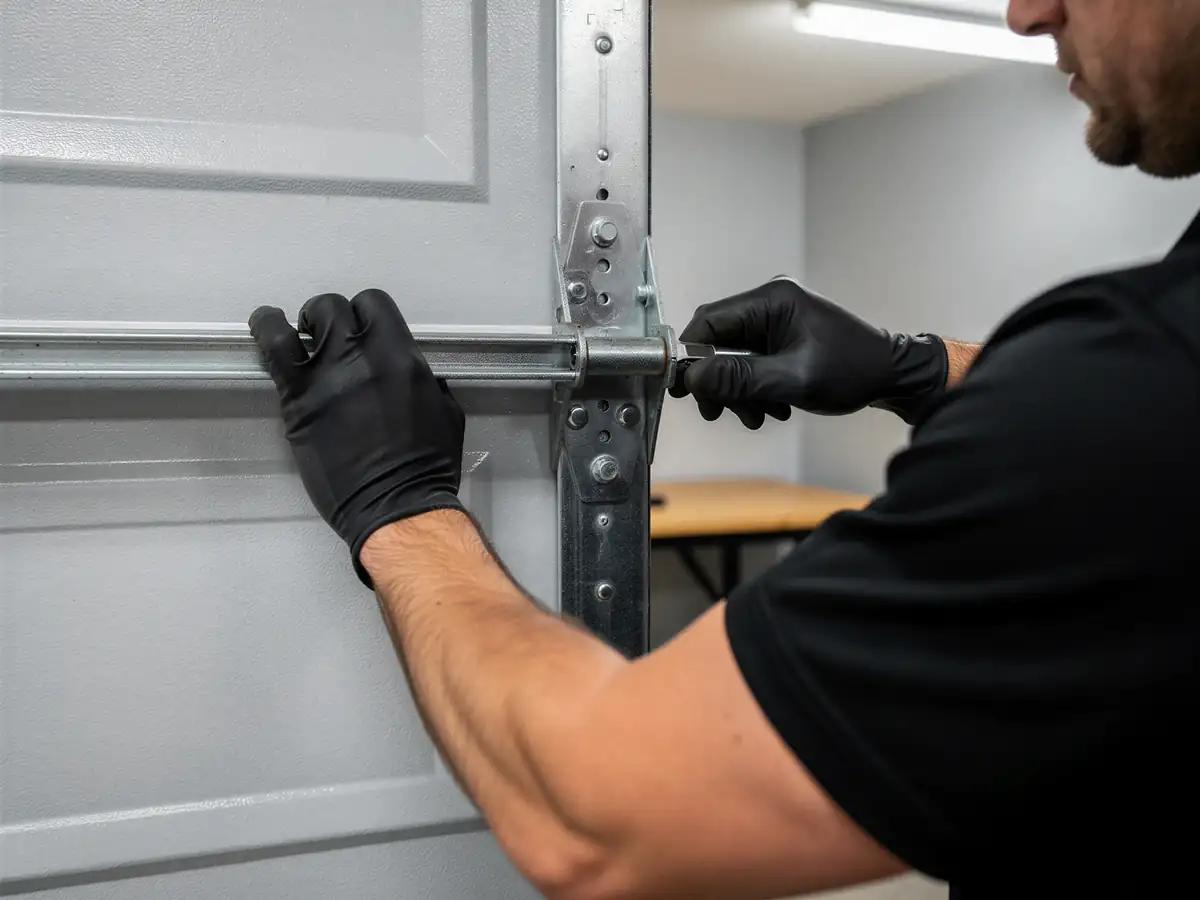
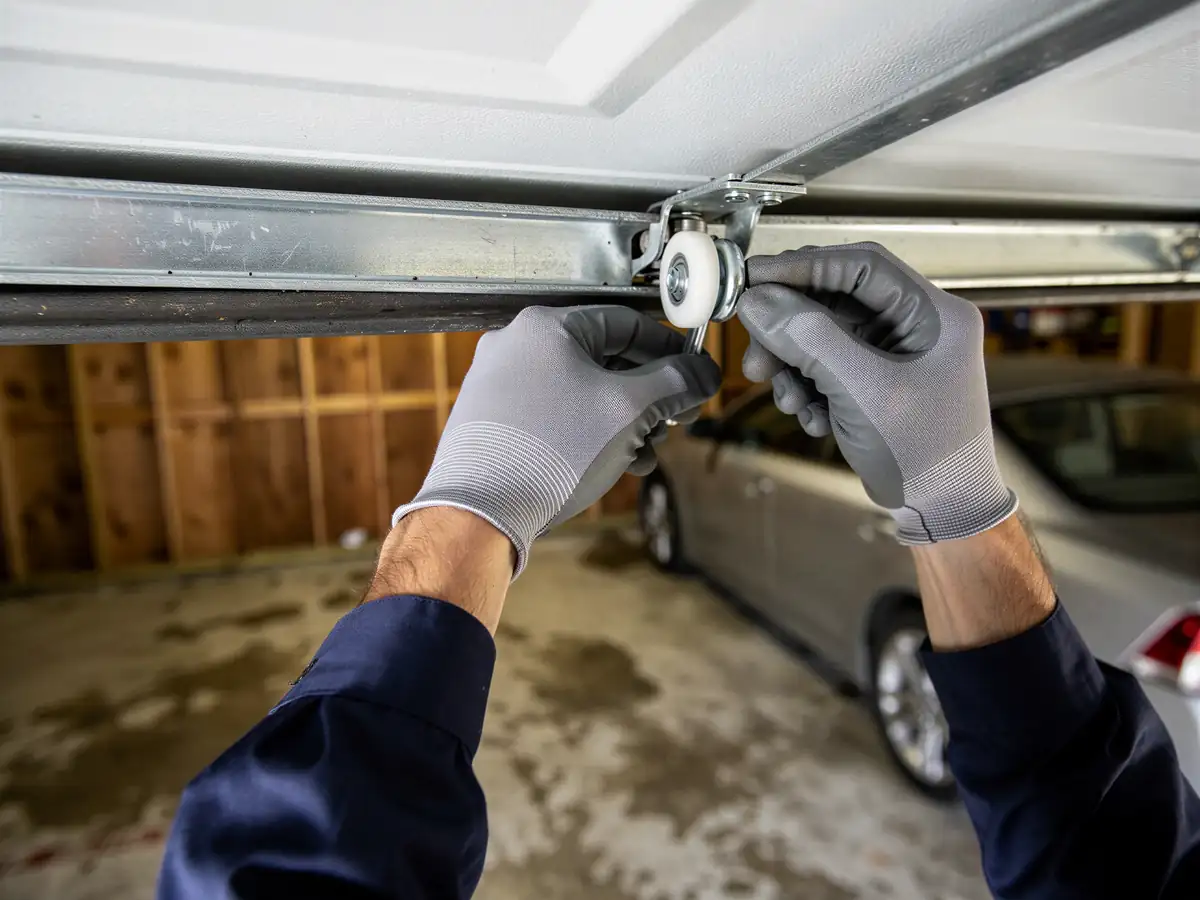
Swapping a single nylon roller on a garage door with the door down and the opener disconnected is within reach for a careful homeowner - pull the roller bracket, slide the old roller out, slide the new one in. Where it stops being a DIY job is anywhere near the bottom bracket on a door under spring tension, or on a track section bent from a worn roller binding for months before anyone noticed.
In Burton, with median year built around 1988, a lot of these doors have had one owner's worth of neglect on the rollers closest to the spring side, since that's the pair that takes the most load and wears first. If you're not sure which rollers are bad versus which tracks are just dirty, we'd rather walk you through what to check over the phone than have you pull a bracket near a loaded cable.
What Can Go Wrong
The climate here stays mild with occasional freeze risk
Which isn't hard on hardware the way a true freeze-thaw cycle is, but humidity still does its work on unsealed steel rollers over three-plus decades - rust pitting on the stem, grit packed into the bearing, a wheel that no longer turns freely in the track. On a door that old, a single bad roller rarely stays a single bad roller for long; it drags, the track flexes, and the roller two spots down starts wearing unevenly too.
The other failure we see on 1988-era doors is a roller that's seized but still technically holding
The door looks fine until the track bends from the friction, and at that point you're pricing a track section alongside the rollers. Catching it before the track bends is the difference between a parts swap and a bigger repair, which is part of why we ask about symptoms - grinding, a jerky stop, a door that looks crooked going up - rather than just scheduling a generic roller job sight unseen.